
Table of Contents
- What Are PPR and CPVC Pipes?
- Why Compare PPR and CPVC?
- Material Composition
- Pressure and Temperature Performance
- Installation Methods
- Durability and Service Life
- Corrosion and Chemical Resistance
- Common Applications of PPR and CPVC Pipes
- Advantages and Disadvantages of PPR Pipes
- Advantages and Disadvantages of CPVC Pipes
- PPR vs CPVC: Which Pipe Should You Choose?
- Frequently Asked Questions (FAQs)
- Conclusion
- Why Choose TUFF PN25 PPR Pipes?
- Speak with a TUFF Plumbing Expert
What Is a PPR Pipe?
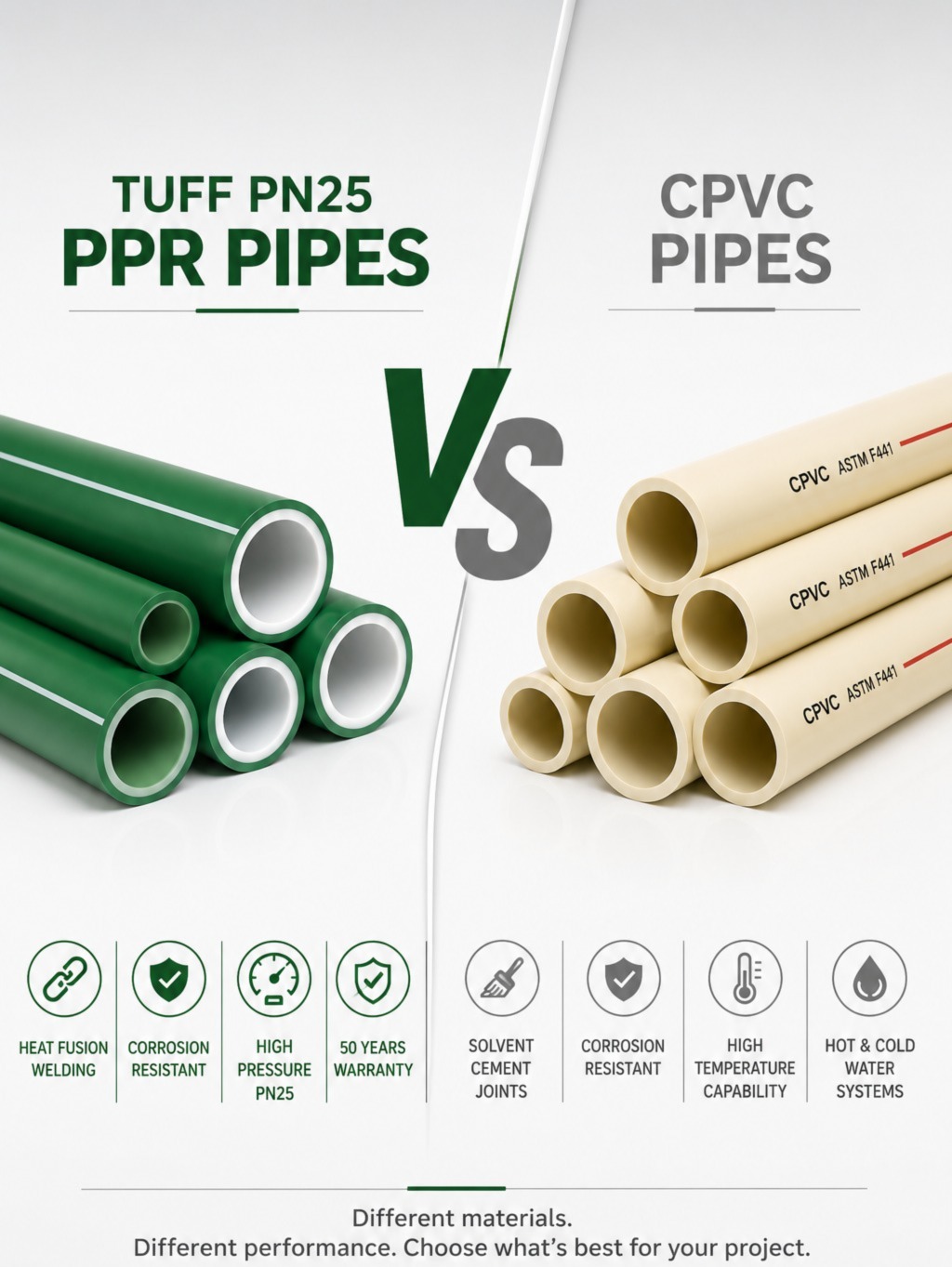
PPR pipe is manufactured from Polypropylene Random Copolymer, a thermoplastic material developed for pressurised plumbing systems. It is widely used for hot and cold water distribution because of its resistance to corrosion, mineral scale build up, and high operating temperatures.
One of the defining characteristics of PPR is its heat fusion welding installation method. During installation, the pipe and fitting are heated using a fusion welding machine and permanently fused together, creating a continuous joint of the same material. When installed correctly, this process produces durable, leak resistant connections suitable for long term plumbing performance.
PPR pipes are available in different pressure classes, including PN10, PN16, PN20, and PN25, allowing engineers and plumbers to select products that match the operating conditions of each project.
What Are PPR and CPVC Pipes?
Modern plumbing systems demand piping materials that are durable, reliable, and capable of delivering safe water efficiently over many years. Among the most widely used plastic piping materials for pressurised water distribution are PPR (Polypropylene Random Copolymer) and CPVC (Chlorinated Polyvinyl Chloride).
Although both materials are used for hot and cold water applications, they are manufactured differently, installed using different methods, and have distinct performance characteristics. Understanding these differences is essential for selecting the right piping system for residential, commercial, healthcare, hospitality, and industrial projects.
What Is a CPVC Pipe?
CPVC pipe is manufactured from Chlorinated Polyvinyl Chloride, an enhanced form of PVC that has been chlorinated to improve its temperature resistance. This additional chlorination allows CPVC to be used in both hot and cold water plumbing systems.
Unlike PPR, CPVC pipes are typically joined using solvent cement. The solvent softens the surfaces of the pipe and fitting, allowing them to bond together as the joint cures. Proper surface preparation and adherence to the manufacturer’s installation instructions are essential for achieving reliable joints.
CPVC is widely used in residential plumbing, commercial buildings, healthcare facilities, and industrial applications where its performance characteristics meet the requirements of the plumbing system.
Two Proven Materials for Modern Plumbing
Both PPR and CPVC have earned a place in modern construction because they offer excellent corrosion resistance and reliable performance when used within their intended applications.
However, differences in material composition, pressure capability, temperature performance, installation methods, durability, and maintenance requirements mean they are not always interchangeable.
Understanding these differences is the first step toward selecting the piping system that best suits your project’s technical requirements and long term performance expectations.

Why Compare PPR and CPVC?
PPR and CPVC pipes are often compared because they are both widely used for pressurised hot and cold water plumbing systems. To someone planning a construction project, they may appear to serve the same purpose. However, while they share some similarities, they differ significantly in material composition, installation methods, pressure performance, temperature resistance, and long term system characteristics.
Choosing between these two piping systems should never be based solely on price or familiarity. Every plumbing project has unique operating conditions, including water temperature, working pressure, building type, installation environment, and maintenance expectations. Selecting a pipe that aligns with these requirements is essential for achieving reliable and efficient system performance.
For homeowners, the right choice can contribute to a plumbing system that performs consistently for years. For plumbers and contractors, selecting the appropriate material helps ensure installations meet project specifications and client expectations. For Engineers, Architects, and consultants, understanding the strengths and limitations of each piping system supports better design decisions and long term project success.
It is also important to recognise that no single piping material is ideal for every application. Both PPR and CPVC have been developed to perform under specific conditions, and each offers advantages when used as intended. Understanding where each material performs best allows professionals to specify the most suitable solution rather than relying on assumptions or general preferences.
Throughout this guide, we will compare PPR and CPVC across the factors that matter most, including material composition, pressure and temperature performance, installation methods, durability, corrosion resistance, common applications, and overall suitability for different types of plumbing projects. By the end of this comparison, you’ll have a clear understanding of how both systems differ and how to choose the right one for your specific application.

Material Composition
Although PPR and CPVC pipes are both classified as thermoplastics, they are manufactured from different materials with distinct physical and chemical properties. These differences influence how each pipe performs under various operating conditions and why they are installed using different joining methods.
PPR Material Composition
PPR pipes are manufactured from Polypropylene Random Copolymer, a high performance thermoplastic specifically developed for pressurised plumbing systems.
Its molecular structure provides excellent resistance to corrosion, mineral scale build up, and many chemicals commonly found in water distribution systems. It also offers good mechanical strength and the ability to perform reliably in both hot and cold water applications.
One of the defining characteristics of PPR is that it is designed to be heat fusion welded, allowing the pipe and fitting to become one continuous piece of material. This creates durable, leak resistant joints when installed according to the manufacturer’s recommendations.
CPVC Material Composition
CPVC pipes are manufactured from Chlorinated Polyvinyl Chloride, a modified form of PVC that undergoes an additional chlorination process during manufacturing.
The increased chlorine content improves the material’s ability to withstand higher operating temperatures compared with standard PVC, making CPVC suitable for both hot and cold water plumbing systems.
Unlike PPR, CPVC is installed using solvent cement, where the pipe and fitting are chemically bonded together after the application of a specially formulated adhesive.

How Material Composition Affects Performance
The differences in material composition influence several important characteristics of each piping system, including:
- Installation method
- Temperature capability
- Pressure performance
- Flexibility
- Joint construction
- Long term maintenance requirements
These characteristics do not make one material universally better than the other. Instead, they determine where each piping system performs most effectively and why selecting the appropriate material depends on the specific requirements of the project.
Understanding the composition of PPR and CPVC provides a solid foundation for evaluating their performance in the remaining sections of this guide.
| PPR | CPVC |
|---|---|
| Polypropylene Random Copolymer | Chlorinated Polyvinyl Chloride |
| Heat fusion welding | Solvent cement joints |
| Designed for pressurised plumbing | Designed for pressurised plumbing |
| Resistant to corrosion and scale | Resistant to corrosion and many chemicals |
| Suitable for hot & cold water | Suitable for hot & cold water |
Pressure and Temperature Performance
Pressure and temperature are among the most critical factors in the design of any plumbing system. Whether supplying water to a residential property, a commercial building, or an industrial facility, the selected piping material must be capable of performing safely and reliably under the expected operating conditions.
Both PPR and CPVC pipes are designed for pressurised hot and cold water applications, making them suitable for a wide range of plumbing installations. However, each material has unique performance characteristics that should be considered during product selection.
Pressure Performance
PPR pipes are available in multiple pressure classes, including PN10, PN16, PN20, and PN25, allowing engineers and plumbers to select the pressure rating that best matches the design requirements of the system.
CPVC pipes are also manufactured in different pressure ratings, with the appropriate product selected according to the applicable plumbing standards, operating pressure, and intended application.
Regardless of the material, the pressure rating of the pipe should always meet or exceed the design requirements of the plumbing system. Using an appropriately rated pipe helps support reliable long term performance and system safety.
Temperature Performance
One of the reasons both PPR and CPVC are widely used in modern plumbing is their suitability for hot and cold water distribution.
As with all thermoplastic piping systems, allowable working pressure changes as operating temperature increases. For this reason, professional plumbing design always considers pressure and temperature together rather than evaluating either factor independently.
Manufacturers provide pressure temperature performance data to help installers and engineers select the appropriate product for the expected operating conditions. Following these specifications is essential to achieving dependable plumbing performance.
Selecting the Right Pipe
Choosing between PPR and CPVC should not be based on pressure or temperature alone.
Other factors including installation method, system design, maintenance requirements, compatibility with fittings, and applicable building standards also influence the most suitable choice for a project.
By considering all of these factors together, construction professionals can specify a piping system that delivers reliable performance throughout its intended service life.
| PPR Pipes | CPVC Pipes |
|---|---|
| Available in PN10, PN16, PN20 & PN25 | Available in multiple pressure-rated classes |
| Suitable for hot & cold water | Suitable for hot & cold water |
| Heat fusion welded joints | Solvent cement joints |
| Selected according to pressure and operating temperature | Selected according to pressure and operating temperature |
Installation Methods
The installation method plays a significant role in the performance and reliability of any plumbing system. Even the highest quality piping materials depend on proper installation to achieve their intended service life.
Although PPR and CPVC are both used in pressurised hot and cold water systems, they use completely different joining techniques. Understanding these methods helps installers, contractors, and project owners appreciate how each system is assembled and maintained.
Installing PPR Pipes
PPR pipes are joined using heat fusion welding, a process in which both the pipe and fitting are heated simultaneously with a fusion welding machine before being joined together.
Once heated to the correct temperature, the pipe is inserted into the fitting without twisting and allowed to cool naturally. As the material cools, the two components fuse together, forming a continuous joint made from the same material.
When performed according to the manufacturer’s instructions, heat fusion welding creates durable, leak resistant joints that are well suited for pressurised plumbing systems.
Successful fusion welding depends on several factors, including:
- Correct welding temperature
- Proper heating time
- Accurate insertion depth
- Correct alignment
- Adequate cooling time
Professional training and the use of compatible fusion welding equipment help ensure consistent installation quality.
Installing CPVC Pipes
CPVC pipes are commonly joined using solvent cement, a specially formulated adhesive designed for CPVC materials.
During installation, the pipe is cut squarely, cleaned, and prepared before solvent cement is applied to the mating surfaces. The pipe and fitting are then assembled and held in position while the joint begins to cure.
To achieve reliable joints, installers should carefully follow the manufacturer’s recommendations regarding:
- Surface preparation
- Correct solvent cement application
- Assembly procedures
- Curing time before pressurising the system
Proper installation is essential to ensure dependable long term performance.
Choosing the Right Installation Method
Neither installation method is universally better they are simply designed for different piping materials.
Heat fusion welding is specifically developed for PPR systems, while solvent cement joining is the standard installation method for CPVC systems.
The most appropriate choice depends on the project’s requirements, the installer’s expertise, available equipment, applicable plumbing standards, and the manufacturer’s recommendations.
Regardless of the piping material selected, following recognised installation practices is one of the most important factors in achieving a safe, efficient, and reliable plumbing system.
| PPR Pipes | CPVC Pipes |
|---|---|
| Heat fusion welding | Solvent cement joints |
| Fusion welding machine | CPVC solvent cement |
| Pipe and fitting fused into one continuous joint | Pipe and fitting chemically bonded |
| Suitable for pressurised hot & cold water systems | Suitable for pressurised hot & cold water systems |
Durability and Service Life
A plumbing system is a long term investment, and its durability depends on more than simply choosing a quality pipe. The material, operating conditions, installation quality, and maintenance practices all contribute to how well the system performs over time.
Both PPR and CPVC pipes are designed to provide reliable service in pressurised hot and cold water systems when installed correctly and used within their intended operating conditions. However, each material has unique characteristics that influence its long term performance.
Durability of PPR Pipes
PPR pipes are widely recognised for their resistance to corrosion, mineral scale build up, and many chemicals commonly found in potable water systems. Their smooth internal surface helps maintain efficient water flow by reducing the accumulation of deposits over time.
A key feature of PPR systems is the heat fusion joint, where the pipe and fitting become one continuous piece of material. When installed correctly, these joints provide durable, leak resistant connections that support the long term integrity of the plumbing system.
PPR pipes are commonly used in residential, commercial, healthcare, hospitality, and industrial buildings where dependable long term water distribution is required.
Durability of CPVC Pipes
CPVC pipes are also designed for long term use in hot and cold water plumbing systems. Their resistance to corrosion and many water related chemicals makes them a dependable option for a wide range of residential and commercial applications.
When installed according to the manufacturer’s guidelines using compatible solvent cement and fittings, CPVC systems can provide reliable long term performance under their specified operating conditions.
As with any plumbing material, protecting the system from physical damage, improper installation, and operating conditions beyond its design limits is essential for maintaining performance throughout its service life.
What Influences Service Life?
The longevity of both PPR and CPVC systems depends on several important factors, including:
- Correct pipe selection
- Operating pressure
- Water temperature
- Professional installation
- Compatible fittings
- Compliance with manufacturer recommendations
- Regular inspection and maintenance
Selecting the appropriate pipe and ensuring it is installed correctly are the most important steps in achieving a durable plumbing system.
Making a Long Term Investment
Whether choosing PPR or CPVC, the goal should be to select a piping system that matches the technical requirements of the project.
A properly designed and professionally installed plumbing system not only reduces maintenance requirements but also supports efficient water distribution and dependable performance for many years.

Corrosion and Chemical Resistance
One of the greatest advantages of modern plastic piping systems is their natural resistance to corrosion. Unlike traditional metal pipes, which may rust, oxidise, or develop internal corrosion over time, both PPR and CPVC pipes are designed to resist many of the conditions commonly encountered in plumbing systems.
This resistance helps maintain water quality, reduce maintenance requirements, and support dependable long term performance in residential, commercial, and industrial applications.
Corrosion Resistance of PPR Pipes
PPR pipes are manufactured from Polypropylene Random Copolymer, a material that does not rust or corrode when exposed to water.
They are also resistant to mineral scale build up, helping maintain smooth internal water flow throughout the life of the plumbing system. This makes PPR pipes particularly suitable for potable water distribution and pressurised hot and cold water systems.
Because PPR is unaffected by electrochemical corrosion, it provides a reliable alternative to traditional metallic piping materials in many modern plumbing installations.
Corrosion Resistance of CPVC Pipes
CPVC pipes also provide excellent resistance to corrosion and are widely used in hot and cold water plumbing systems.
Manufactured from Chlorinated Polyvinyl Chloride, CPVC does not rust or suffer from the corrosion issues associated with metal pipes. Its resistance to moisture and many environmental conditions contributes to dependable performance in residential, commercial, and institutional plumbing projects.
When installed according to the manufacturer’s recommendations, CPVC systems provide reliable corrosion resistance throughout their intended service life.
Chemical Resistance
Both PPR and CPVC pipes offer good resistance to many chemicals commonly encountered in water distribution systems. However, chemical compatibility varies depending on:
- The type of chemical
- Chemical concentration
- Operating temperature
- Operating pressure
- Duration of exposure
For specialised industrial or chemical processing applications, installers and engineers should always consult the manufacturer’s chemical compatibility data before selecting a piping system.
Choosing the Right Material
Corrosion and chemical resistance are important considerations, but they should not be evaluated in isolation.
Other factors such as operating pressure, water temperature, installation method, plumbing standards, and the intended application should also be considered when selecting a piping system.
By assessing the complete operating environment, professionals can choose the material that best meets the technical requirements of the project while supporting reliable long term plumbing performance.
| PPR Pipes | CPVC Pipes |
|---|---|
| Resistant to rust and corrosion | Resistant to rust and corrosion |
| Resists mineral scale build-up | Resistant to moisture and many environmental conditions |
| Suitable for potable hot & cold water systems | Suitable for hot & cold water plumbing systems |
| Good resistance to many plumbing-related chemicals | Good resistance to many plumbing-related chemicals |
Common Applications of PPR and CPVC Pipes
PPR and CPVC pipes are both trusted solutions for modern plumbing systems, particularly in applications involving pressurised hot and cold water distribution. While they share many similarities, they are commonly specified for different project requirements depending on system design, installation preferences, applicable standards, and operating conditions.
Understanding where each material is typically used helps homeowners, plumbers, contractors, engineers, and developers select the most appropriate piping system for their projects.
Common Applications of PPR Pipes
PPR pipes are widely used in projects that require reliable hot and cold water distribution under pressure. Their heat fusion joining method and corrosion resistance make them a preferred choice for many modern plumbing installations.
Typical applications include:
- Residential hot and cold water plumbing
- Apartment buildings
- Hotels and hospitality developments
- Hospitals and healthcare facilities
- Commercial office buildings
- Educational institutions
- Industrial water distribution systems
- Potable water supply networks
- Central hot water circulation systems
Because PPR systems use heat fusion welding, they are commonly selected for projects where permanent, leak resistant joints are required.
Common Applications of CPVC Pipes
CPVC pipes are also widely used for pressurised hot and cold water plumbing and are specified in many residential and commercial projects.
Typical applications include:
- Residential water supply systems
- Apartment complexes
- Hotels
- Healthcare facilities
- Schools and public buildings
- Commercial developments
- Light industrial water distribution
- Renovation and retrofit plumbing projects
CPVC is commonly selected where solvent cement joining aligns with the installation method and project specifications.
Selecting the Right Pipe for the Application
The decision between PPR and CPVC should be based on the technical requirements of the plumbing system rather than on the material alone.
Important considerations include:
- Water temperature
- Operating pressure
- Building type
- Installation method
- Applicable plumbing codes
- Long term maintenance expectations
- Manufacturer recommendations
Evaluating these factors together helps ensure the selected piping system is appropriate for the intended application.
Matching the Pipe to the Project
Successful plumbing systems begin with choosing the right material for the job.
Both PPR and CPVC have proven their value in modern construction, and each offers dependable performance when used within its intended operating conditions. By understanding their common applications and installation requirements, construction professionals and property owners can make informed decisions that support efficient, reliable, and long lasting plumbing systems.

Advantages and Disadvantages of PPR Pipes
PPR pipes have become one of the most widely used piping materials for modern hot and cold water plumbing systems. Their corrosion resistance, heat fusion joining method, and suitability for pressurised water distribution have made them a preferred choice for residential, commercial, healthcare, hospitality, and industrial projects.
Like any plumbing material, however, PPR pipes have strengths as well as considerations that should be evaluated during system design and product selection.
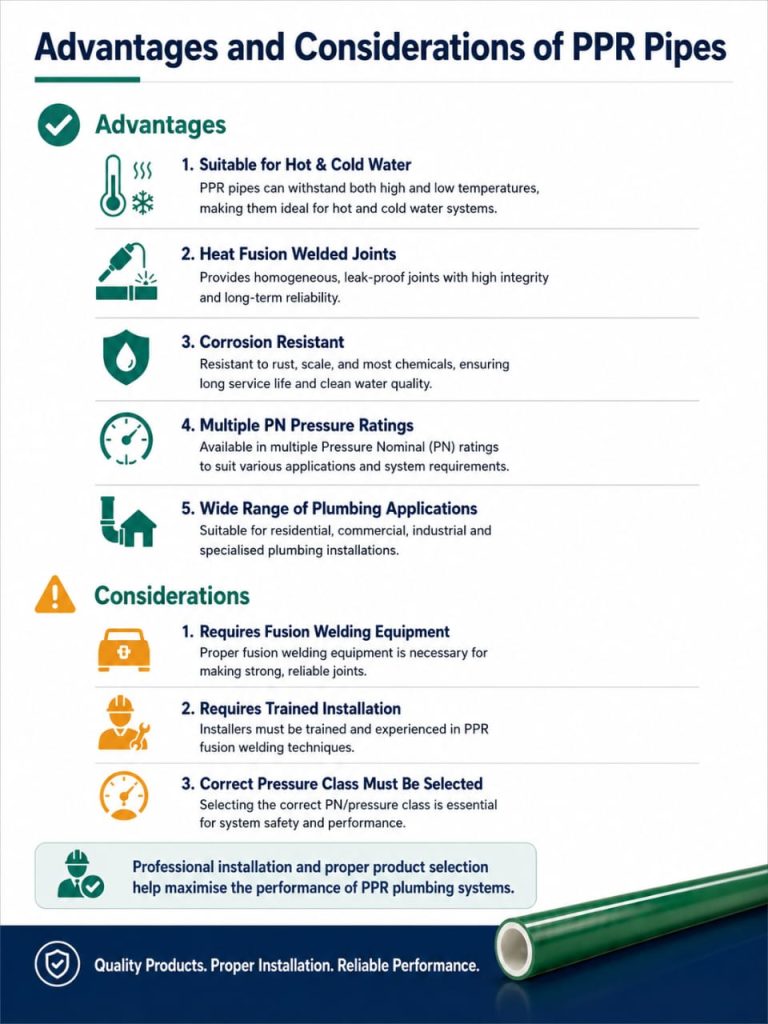
Advantages of PPR Pipes
1. Suitable for Hot and Cold Water Systems
PPR pipes are designed for both hot and cold water distribution, making them suitable for a wide variety of plumbing applications. Their versatility allows a single piping system to be used throughout many residential and commercial installations.
2. Heat Fusion Creates Durable, Leak-Resistant Joints
One of the defining features of PPR is its heat fusion welding process. During installation, the pipe and fitting are fused together to form a continuous joint of the same material.
When performed correctly, this joining method produces durable, leak resistant connections that support the long term reliability of the plumbing system.
3. Excellent Corrosion Resistance
PPR pipes do not rust or corrode and are resistant to mineral scale build up. Their smooth internal surface helps maintain efficient water flow while reducing the likelihood of deposits that may affect system performance over time.
4. Available in Multiple Pressure Classes
PPR pipes are manufactured in several pressure ratings, including PN10, PN16, PN20, and PN25.
This enables engineers and installers to select the appropriate pipe for the specific operating pressure and design requirements of each project.
5. Wide Range of Applications
PPR pipes are commonly used in:
- Residential plumbing
- Hotels and hospitality projects
- Hospitals and healthcare facilities
- Commercial buildings
- Educational institutions
- Industrial water systems
- Potable water distribution
- Central hot water circulation systems
Their versatility makes them suitable for many modern plumbing applications.
Considerations When Using PPR Pipes
1. Requires Fusion Welding Equipment
PPR installation requires a dedicated fusion welding machine and compatible welding accessories.
Using the correct equipment is essential for producing reliable fusion joints and achieving consistent installation quality.
2. Installation Requires Proper Training
Successful heat fusion depends on correct heating temperature, insertion depth, alignment, and cooling time.
Professional training and adherence to the manufacturer’s installation procedures help ensure dependable system performance.
3. Correct Product Selection Is Essential
Choosing the appropriate pressure class, pipe size, and compatible fittings is critical.
Selecting products that match the operating conditions of the project helps maximise safety, efficiency, and long term reliability.
Why Many Professionals Choose PPR
PPR pipes offer an excellent combination of durability, corrosion resistance, pressure performance, and dependable hot and cold water distribution.
When properly specified and professionally installed, they provide reliable plumbing performance across a broad range of applications. As with any piping material, the best results are achieved by selecting products that meet the project’s technical requirements and following recognised installation practices.
Advantages and Disadvantages of CPVC Pipes
CPVC pipes have become a widely used solution for hot and cold water plumbing systems because they combine corrosion resistance with the ability to handle elevated water temperatures. Their versatility has made them a common choice for residential, commercial, healthcare, and light industrial applications.
Like every piping material, however, CPVC has strengths that make it suitable for certain applications as well as considerations that should be evaluated before selecting it for a plumbing system.
Advantages of CPVC Pipes
1. Suitable for Hot and Cold Water Systems
One of the key advantages of CPVC pipes is their ability to transport both hot and cold water. This makes them suitable for a wide range of residential and commercial plumbing installations.
2. Excellent Corrosion Resistance
CPVC pipes do not rust or corrode like traditional metal pipes. Their resistance to moisture and corrosion helps maintain reliable system performance and reduces many of the maintenance concerns associated with metallic piping systems.
3. Good Chemical Resistance
CPVC offers good resistance to many chemicals commonly encountered in plumbing applications. This makes it suitable for potable water systems and certain industrial applications where chemical compatibility requirements are met.
4. Straightforward Installation
CPVC pipes are commonly joined using solvent cement, eliminating the need for specialised fusion welding equipment.
When installed according to the manufacturer’s recommendations, solvent welded joints provide dependable performance for the intended operating conditions.
5. Wide Range of Plumbing Applications
CPVC pipes are commonly used in:
- Residential plumbing systems
- Apartment buildings
- Hotels and hospitality projects
- Hospitals and healthcare facilities
- Commercial office buildings
- Educational institutions
- Light industrial water systems
- Renovation and retrofit projects
Their versatility makes them suitable for many modern plumbing applications.
Considerations When Using CPVC Pipes
1. Proper Joint Preparation Is Essential
Reliable CPVC installations depend on proper surface preparation, correct application of the appropriate solvent cement, and adequate curing time before the system is pressurised.
Following the manufacturer’s installation procedures is essential for achieving dependable joint performance.
2. Product Selection Should Match the Application
CPVC pipes are manufactured in different sizes and pressure ratings.
Selecting the correct product based on operating pressure, water temperature, and the intended application helps ensure safe and reliable plumbing performance.
3. Manufacturer Guidelines Should Always Be Followed
Like any plumbing system, CPVC performs best when installed using compatible fittings, approved installation methods, and recognised plumbing standards.
Professional workmanship remains one of the most important factors influencing long term system reliability.
A Proven Solution for Modern Plumbing
CPVC pipes continue to play an important role in modern plumbing because they provide dependable performance for many hot and cold water applications.
When correctly specified, professionally installed, and operated within their intended design conditions, CPVC systems offer reliable long term service for residential, commercial, and institutional projects.
PPR vs CPVC: Which Pipe Should You Choose?
After comparing their material composition, pressure and temperature performance, installation methods, durability, corrosion resistance, and common applications, the final decision comes down to one question:
Which piping system best suits your project?
The answer depends on the specific operating conditions of the plumbing system. Both PPR and CPVC are proven materials for hot and cold water distribution, but they differ in how they are installed, how they perform in different environments, and how they fit into the overall design of a plumbing system.
Rather than looking for a single best pipe, it is more practical to choose the material that aligns with your project’s technical requirements.
Choose PPR Pipes If Your Project Requires:
- Pressurised hot and cold water systems
- Heat fusion welded joints
- Residential plumbing installations
- Commercial buildings
- Hotels and hospitality developments
- Hospitals and healthcare facilities
- Industrial water distribution
- Potable water supply systems
- A complete plumbing system with compatible pipes, fittings, valves, and fusion welding equipment
PPR pipes are widely specified for modern plumbing because their heat fusion joining method creates durable, leak resistant joints when installed correctly, making them suitable for demanding water distribution systems.
Choose CPVC Pipes If Your Project Requires:
- Hot and cold water plumbing
- Solvent cement installation
- Residential housing projects
- Apartment buildings
- Commercial developments
- Renovation and retrofit installations
- Healthcare and institutional buildings
- Projects where CPVC complies with local plumbing standards and specifications
CPVC remains a dependable solution for many plumbing applications when correctly specified and installed according to the manufacturer’s recommendations.
Consider the Entire Plumbing System
Selecting the right pipe involves more than comparing materials.
Professional plumbers, engineers, and consultants evaluate several important factors before making a specification, including:
- Water temperature
- Operating pressure
- Pipe size
- Pressure rating
- Installation method
- Building type
- Applicable plumbing standards
- Long-term maintenance requirements
- Manufacturer recommendations
Considering these factors together helps ensure the selected piping system delivers safe, efficient, and reliable performance throughout its intended service life.
Make an Informed Decision
There is no single piping material that is ideal for every application.
Both PPR and CPVC have earned their place in modern plumbing by delivering dependable performance within their intended operating conditions.
The best choice is the one that matches your project’s design requirements, installation approach, and long term performance expectations. By understanding the strengths of each material, homeowners and construction professionals can make informed decisions that contribute to reliable and efficient plumbing systems.
Frequently Asked Questions (FAQs)
1. What is the main difference between PPR and CPVC pipes?
The primary difference lies in their material composition and joining methods. PPR pipes are manufactured from Polypropylene Random Copolymer and are joined using heat fusion welding, while CPVC pipes are made from Chlorinated Polyvinyl Chloride and are typically joined using solvent cement. Both are suitable for hot and cold water systems when used according to their intended applications.
2. Which is better for hot water plumbing, PPR or CPVC?
Both PPR and CPVC are designed for hot water distribution. The most suitable choice depends on factors such as the project’s operating conditions, installation method, plumbing standards, and manufacturer recommendations. Professional system design should always consider both pressure and temperature requirements.
3. Are PPR pipes stronger than CPVC pipes?
Both materials are manufactured to meet recognised performance standards for pressurised plumbing systems. Their suitability depends on selecting the correct pressure rating, following the manufacturer’s installation guidelines, and using the products within their specified operating conditions.
4. Why are PPR pipes joined using heat fusion?
PPR pipes are designed to be joined through heat fusion welding, where the pipe and fitting are heated and fused into a continuous piece of material. When carried out correctly, this process creates durable, leak resistant joints suitable for pressurised plumbing systems.
5. Why are CPVC pipes joined with solvent cement?
CPVC pipes are typically installed using solvent cement, which softens the surfaces of the pipe and fitting before they are assembled. As the joint cures, the materials bond together to create a secure connection when installed according to the manufacturer’s instructions.
6. Are both PPR and CPVC resistant to corrosion?
Yes.
Both PPR and CPVC are resistant to rust and corrosion, making them suitable alternatives to traditional metallic piping systems. Their corrosion resistance contributes to reliable long-term plumbing performance when used in appropriate applications.
7. Which pipe requires less maintenance?
Both piping systems generally require minimal maintenance when correctly selected, professionally installed, and operated within their intended design conditions.
Routine inspections and adherence to recommended operating conditions help maximise the service life of either system.
8. Can PPR and CPVC pipes be connected together?
Yes.
Where required, PPR and CPVC systems can be connected using appropriate transition fittings designed for joining different pipe materials. Installers should always follow recognised plumbing practices and the manufacturer’s recommendations.
9. Which pipe lasts longer?
Both PPR and CPVC are designed for long term plumbing applications. Their actual service life depends on factors such as operating pressure, water temperature, installation quality, maintenance, and compliance with the manufacturer’s specifications.
10. Which pipe is better for residential plumbing?
Both materials are widely used in residential plumbing systems.
The best choice depends on the plumbing design, installation method, project specifications, local plumbing standards, and the operating conditions of the system.
11. Is PPR more expensive than CPVC?
The cost of PPR and CPVC pipes varies depending on factors such as pipe size, pressure rating, product specifications, manufacturer, and local market conditions.
When evaluating cost, it is important to consider the total value of the plumbing system, including installation requirements, long term performance, maintenance expectations, and compatibility with fittings and accessories.
12. How do I choose between PPR and CPVC?
The right choice depends on several important considerations, including:
- The intended application
- Water temperature
- Operating pressure
- Installation method
- Pipe size and pressure rating
- Building type
- Applicable plumbing standards
- Manufacturer recommendations
If you’re unsure which piping system best suits your project, consult a qualified plumbing professional or speak with a TUFF Plumbing Expert for technical guidance.

Conclusion
Choosing between PPR and CPVC pipes is not about finding a universally better material. It is about selecting the piping system that best matches the operating conditions, installation requirements, and long term objectives of your plumbing project.
Throughout this guide, we’ve compared PPR and CPVC across the factors that matter most, including material composition, pressure and temperature performance, installation methods, durability, corrosion resistance, common applications, and overall suitability for different types of plumbing systems. While both materials are designed for hot and cold water distribution, each has unique characteristics that make it more suitable for specific installation methods and project requirements.
PPR pipes are widely recognised for their heat fusion joining technology, multiple pressure classes, and suitability for pressurised hot and cold water systems. CPVC pipes continue to be a dependable solution for many residential, commercial, and institutional plumbing projects where solvent cement installation aligns with the project’s design and installation approach.
The success of any plumbing system depends on more than the pipe itself. Professional system design, correct product selection, proper installation techniques, compatible fittings, and adherence to manufacturer recommendations all contribute to long term reliability and efficient performance.
Whether you’re a homeowner planning a renovation, a plumber installing a water distribution system, or an engineer specifying materials for a large commercial development, understanding the differences between PPR and CPVC allows you to make informed decisions that support safe, efficient, and durable plumbing installations.
The future of modern plumbing is built on quality materials, skilled workmanship, and sound technical knowledge. By choosing the right piping system for the right application, you lay the foundation for reliable water distribution and long term performance that will serve your project for years to come.

Why Choose TUFF PN25 PPR Pipes?
Selecting the right piping material is only the first step toward building a reliable plumbing system. Equally important is choosing products that are manufactured to consistent quality standards, supported by compatible system components, and designed to deliver dependable performance over the long term.
At TUFF Bathrooms, we believe a plumbing system should offer more than functionality it should provide confidence. That’s why our PN25 PPR Pipes are developed to meet the demands of modern residential, commercial, healthcare, hospitality, and industrial plumbing projects.
Designed for Modern Water Distribution
TUFF PN25 PPR Pipes are designed for pressurised hot and cold water systems where reliability, durability, and efficient water distribution are essential.
Combined with proper installation and professional workmanship, they help create plumbing systems that perform consistently under demanding operating conditions.
Whether you’re constructing a new home, a hotel, a hospital, an office complex, or an industrial facility, TUFF PN25 PPR Pipes provide a dependable solution for modern plumbing installations.
A Complete PPR Plumbing System
Reliable plumbing depends on more than quality pipes alone.
TUFF offers a complete range of compatible plumbing components, including:
- TUFF PN25 PPR Pipes
- TUFF PPR Fittings
- TUFF Brass Ball Valves
- TUFF Fusion Welding Machines
- TUFF PPR Accessories
Using a complete system of compatible components helps simplify installation, improve joint consistency, and support long term plumbing performance.
Built for Professionals
Plumbers, contractors, engineers, architects, and developers require products they can specify and install with confidence.
TUFF PPR systems are suitable for:
- Residential developments
- Commercial buildings
- Hotels and hospitality projects
- Hospitals and healthcare facilities
- Educational institutions
- Industrial water distribution systems
Our products are designed to support modern plumbing practices while helping professionals deliver reliable installations that meet project requirements.
More Than Products Technical Support
At TUFF Bathrooms, we believe technical knowledge is just as important as product quality.
That is why we continue to invest in educational resources, installation guidance, and technical content that helps construction professionals make informed decisions throughout every stage of a project.
By combining premium plumbing products with practical technical support, we help customers build systems that are designed for long term performance.
Build with Confidence. Build with TUFF.
Every successful plumbing project begins with the right decisions from selecting the appropriate piping material to choosing compatible system components and following recognised installation practices.
With TUFF PN25 PPR Pipes, you’re choosing a complete plumbing solution backed by quality products, technical expertise, and a commitment to helping professionals build dependable water distribution systems.
Build Smarter. Build Stronger. Build with TUFF.
Speak with a TUFF Plumbing Expert
Choosing between PPR and CPVC pipes is an important decision, but selecting the right plumbing system involves more than comparing materials. Every project has unique technical requirements, including operating pressure, water temperature, installation methods, building type, and long term performance expectations.
Whether you’re constructing a new home, managing a commercial development, designing a healthcare facility, or specifying materials for an industrial project, making informed decisions at the planning stage helps improve system reliability, reduce maintenance requirements, and support efficient water distribution for years to come.
At TUFF Bathrooms, we do more than supply premium plumbing products. We provide practical technical guidance to help homeowners, plumbers, contractors, engineers, architects, developers, and consultants choose the right piping systems for their projects.
Our Technical Team Can Help You With
- Selecting the right piping system for your application.
- Understanding the differences between PPR and CPVC pipes.
- Choosing the appropriate PPR pressure rating and pipe size.
- Selecting compatible PPR fittings and accessories.
- Choosing the right fusion welding equipment.
- Understanding product specifications and recommended applications.
- Locating your nearest authorised TUFF distributor or showroom.
Whether you’re working on a residential plumbing installation or a large commercial development, our team is ready to help you make informed decisions that support long term plumbing performance.
Why Partner with TUFF Bathrooms?
At TUFF Bathrooms, we believe that successful plumbing systems are built on three foundations:
- Premium quality plumbing products
- Professional installation practices
- Sound technical knowledge
That’s why we continue to invest in product innovation, technical education, and customer support to help construction professionals deliver dependable plumbing systems with confidence.
Our complete PN25 PPR plumbing system including pipes, fittings, brass ball valves, and fusion welding equipment is designed to work together, providing a reliable solution for modern hot and cold water distribution.
Let’s Build Your Next Project Together
If you’re planning a plumbing installation or need guidance on whether PPR or CPVC is the right choice for your project, our technical team is here to help.
Contact TUFF Bathrooms today to:
- Request a product catalogue
- Speak with a TUFF Plumbing Expert
- Locate your nearest showroom
- Find an authorised distributor
- Learn more about our complete PN25 PPR plumbing solutions
From product selection to installation guidance, we’re committed to helping you build plumbing systems that deliver lasting performance.

Build Smarter. Build Stronger. Build with TUFF.
Strong Call to Action
Build with Confidence. Build with TUFF.
Every successful plumbing project begins with the right decisions. Choosing the appropriate piping system today can improve performance, reduce maintenance, and deliver reliable water distribution for decades to come.
Whether you’re a homeowner planning a new build, a plumber handling an installation, a contractor managing a project, or an engineer specifying plumbing materials, TUFF Bathrooms is here to support you with premium products and expert technical guidance.
Explore our complete range of PN25 PPR Pipes, PPR Fittings, Brass Ball Valves, and Fusion Welding Equipment, or speak with our technical team for professional advice tailored to your project’s requirements.
Visit your nearest TUFF showroom, request our product catalogue, or contact a TUFF Plumbing Expert today.
Build Smarter. Build Stronger. Build with TUFF.