
Table of Contents
- What is PPR Pipe Welding?
- Why Are PPR Pipes Welded Instead of Glued?
- How Does PPR Fusion Welding Work?
- Tools Required for PPR Pipe Welding
- Types of PPR Welding Machines
- Step-by-Step Guide to PPR Pipe Welding
- PPR Welding Temperature and Heating Time
- Common PPR Welding Mistakes to Avoid
- How to Identify a Proper PPR Fusion Weld
- Advantages of PPR Fusion Welding
- Where Are Welded PPR Systems Used?
- Safety Tips for PPR Pipe Welding
- Frequently Asked Questions (FAQs) About PPR Pipe Welding
- Expert Tips for Long-Lasting PPR Installations
- Conclusion
- Why Choose TUFF PPR Pipes, Fittings & Welding Equipment?
- Speak With a TUFF Plumbing Expert
What is PPR Pipe Welding?
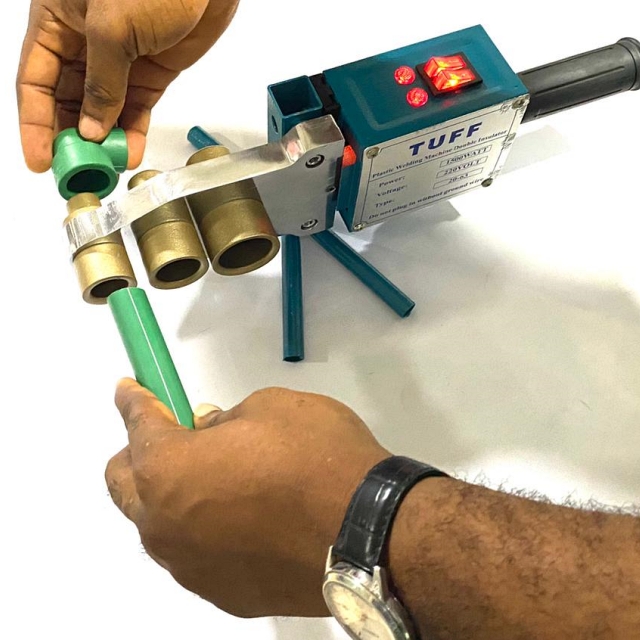
PPR pipe welding, also known as PPR fusion welding or Heat fusion welding, is the process of permanently joining PPR (Polypropylene Random Copolymer) pipes and fittings using controlled heat. Unlike PVC piping systems that rely on adhesives, PPR systems use a specialised fusion welding machine to heat both the pipe and the fitting before they are joined together.
As the heated components cool, the pipe and fitting fuse at the molecular level to form a single continuous piece of material. This creates a durable, leak resistant connection that becomes an integral part of the plumbing system when installed correctly.
The term “welding” can sometimes be misleading because no metal is involved. Instead, the process uses heat to soften the polypropylene material so that the pipe and fitting bond together permanently. This heat fusion method is one of the defining characteristics of PPR plumbing systems and is a major reason they are widely used for modern hot and cold water installations.
PPR pipe welding is commonly used in residential homes, commercial buildings, hotels, hospitals, industrial facilities, and other projects where long term plumbing reliability is essential. When carried out using the correct equipment and following the manufacturer’s recommended procedures, fusion welded joints provide excellent strength and dependable performance throughout the service life of the plumbing system.
Unlike mechanical joints that depend on rubber seals or threaded connections, a properly executed fusion weld creates a continuous pipeline that helps minimise potential leak points and supports efficient water distribution.
Understanding how PPR pipe welding works is essential for plumbers, contractors, engineers, and property owners who want to build plumbing systems designed for long-term performance.

Why Are PPR Pipes Welded Instead of Glued?
One of the biggest differences between PPR plumbing systems and many traditional plastic piping systems is the method used to join the pipes and fittings. While some plastic pipes are connected using solvent cement or adhesives, PPR pipes are joined through a process called heat fusion welding.
The reason is simple: PPR is a thermoplastic material specifically designed to be fused together using controlled heat. During installation, the pipe and fitting are heated simultaneously with a PPR fusion welding machine. Once they reach the correct temperature, they are joined together, creating a permanent molecular bond as the material cools.
Unlike adhesive based joints, which depend on a bonding agent to hold two separate components together, heat fusion transforms the pipe and fitting into one continuous piece of material. This significantly reduces the number of potential leak points within the plumbing system when installation is carried out correctly.
Another important advantage is consistency. Adhesive joints can be affected by factors such as incorrect glue application, insufficient curing time, contamination, or environmental conditions during installation. Heat fusion, when performed using the correct equipment and following the manufacturer’s recommended procedures, produces consistent and reliable joints that are designed to perform under the system’s specified pressure and temperature conditions.
This welding method also makes PPR systems particularly suitable for hot and cold water distribution. Because the joint becomes part of the pipe itself, it is designed to expand and contract with the rest of the plumbing system under normal operating conditions, helping maintain the integrity of the installation.
It is important to note that welding PPR pipes does not involve flames, sparks, or metal welding techniques. Instead, it uses controlled heat generated by a specialised fusion welding machine to soften the polypropylene material before the components are joined together.
For this reason, professional plumbers, contractors, and engineers rely on heat fusion as the standard installation method for modern PPR plumbing systems, particularly in residential, commercial, healthcare, hospitality, and industrial projects where long term reliability is essential.

How Does PPR Fusion Welding Work?
PPR fusion welding works by heating both the outside surface of the PPR pipe and the inside surface of the matching PPR fitting to a controlled temperature using a PPR fusion welding machine. Once the correct temperature is reached, the two components are joined together, allowing the softened polypropylene material to fuse into a single continuous structure.
Unlike mechanical joints that rely on threads, rubber seals, or adhesives, heat fusion creates a molecular bond between the pipe and the fitting. As the material cools naturally, the molecules of both components interlock, forming a permanent connection that becomes an integral part of the plumbing system.
This process is often referred to as socket fusion welding, one of the most widely used joining methods for PPR piping systems. When performed correctly, the finished joint has no separate bonding material or mechanical fastener. Instead, the pipe and fitting become one continuous piece of polypropylene.
The quality of a fusion weld depends on several important factors, including the correct heating temperature, heating time, insertion depth, alignment during assembly, and cooling time. Even small installation errors such as overheating, underheating, twisting the pipe during insertion, or moving the joint before it has cooled can affect the quality of the connection.
For this reason, professional plumbers follow the manufacturer’s recommended installation procedures and use calibrated fusion welding machines designed specifically for PPR systems.
One of the key advantages of fusion welding is consistency. Because the joint becomes part of the pipe itself, there are no adhesives to cure, no threaded joints to tighten, and no rubber seals that may wear over time. When installed correctly using compatible pipes and fittings, fusion welded joints provide durable, leak resistant performance for both hot and cold water distribution systems.
This combination of engineering simplicity and long term reliability is one of the main reasons PPR fusion welding has become the preferred installation method for modern plumbing projects around the world.
Tools Required for PPR Pipe Welding
Successful PPR pipe welding depends not only on proper technique but also on using the right tools. Professional plumbers rely on specialised equipment to produce accurate, consistent, and durable heat fused joints.
Using incorrect or poorly maintained tools can affect weld quality, reduce system reliability, and increase the risk of installation failures. Below are the essential tools required for professional PPR pipe welding.
1. PPR Fusion Welding Machine
The PPR fusion welding machine is the most important tool in the installation process. It heats both the pipe and fitting to the correct fusion temperature, allowing them to bond together at the molecular level.
Fusion welding machines are available in different sizes and capacities to accommodate various pipe diameters, from residential installations to large commercial and industrial projects.

2. Heating Dies (Heating Sockets)
Heating dies are attached to the fusion welding machine and are selected according to the diameter of the pipe being installed. Each die heats both the outside of the pipe and the inside of the fitting simultaneously, ensuring even heat distribution before fusion.
Using the correct die size is essential for producing high-quality welds.
3. PPR Pipe Cutter
A PPR pipe cutter is used to produce clean, straight cuts before welding. A square cut allows the pipe to enter the fitting evenly, helping to create a uniform fusion joint.
Using damaged or unevenly cut pipe ends can affect the quality of the finished connection.
4. Measuring Tape
Accurate measurements help ensure the correct pipe lengths are cut before installation. Proper measurement reduces material waste and supports accurate system layout.
5. Marker or Measuring Pencil
A marker is used to indicate insertion depth on the pipe before welding. This helps plumbers insert the pipe to the correct depth without over inserting or under inserting it into the fitting.
6. Cleaning Cloth
Before heating, both the pipe and fitting should be clean and free from dust, moisture, grease, or debris. A clean cloth helps prepare the surfaces for proper heat fusion.
7. Pipe Support and Clamps
During larger installations, pipe supports and clamps help maintain alignment while the system is assembled. Proper support also prevents unnecessary stress on welded joints after installation.
8. Pressure Testing Equipment
Once the plumbing system has been completed, pressure testing equipment is used to verify the integrity of all welded joints before the system is commissioned. This is an important quality control step on professional plumbing projects.
| Tool | Purpose | Required? |
|---|---|---|
| PPR Fusion Welding Machine | Heats the pipe and fitting for fusion | ✔ Essential |
| Heating Dies | Match the pipe diameter for even heating | ✔ Essential |
| Pipe Cutter | Produces clean, square pipe cuts | ✔ Essential |
| Measuring Tape | Measures pipe lengths accurately | ✔ Essential |
| Marker | Marks insertion depth | ✔ Essential |
| Cleaning Cloth | Removes dirt and moisture | ✔ Essential |
| Pipe Supports | Maintains alignment on larger installations | Recommended |
| Pressure Testing Equipment | Verifies system integrity before use | ✔ Essential |
Why Using the Right Tools Matters
Every tool used during PPR pipe welding contributes to the quality of the finished installation. A well maintained fusion welding machine, correctly sized heating dies, accurate measurements, clean pipe surfaces, and proper pressure testing all help produce reliable joints designed for long term performance.
Professional plumbers understand that successful fusion welding is not only about experience, it is also about using the correct tools, following the recommended installation procedures, and maintaining equipment in good working condition.
Types of PPR Welding Machines
PPR fusion welding machines are available in different sizes and configurations to suit various plumbing applications. The right machine depends on factors such as pipe diameter, project scale, installation environment, and the frequency of use.
Whether you’re carrying out a small residential installation or a large commercial project, selecting the appropriate fusion welding machine helps achieve consistent heating, accurate fusion joints, and reliable long term performance.
Below are the most common types of PPR welding machines used by plumbing professionals.
1. Manual PPR Fusion Welding Machine
Manual fusion welding machines are the most commonly used for residential and light commercial plumbing installations. They are compact, portable, and designed for joining smaller pipe sizes such as 20mm, 25mm, 32mm, 40mm, and 63mm.
These machines are widely used by plumbers because they are easy to transport, simple to operate, and suitable for most building projects.
2. Digital Temperature-Controlled Welding Machine
Digital fusion welding machines feature an electronic temperature control system that helps maintain a consistent heating temperature throughout the installation process.
This allows installers to monitor and adjust the operating temperature more precisely, making these machines suitable for projects where consistent heat control is important.
3. Hydraulic Butt Fusion Welding Machine
Hydraulic butt fusion machines are designed for joining large diameter polypropylene pipes that are too large for standard socket fusion equipment.
Instead of inserting a pipe into a fitting, butt fusion joins two pipe ends directly by heating and pressing them together under controlled pressure.
These machines are commonly used in municipal water supply networks, industrial facilities, infrastructure projects, and other large scale piping installations.
4. Workshop Fusion Welding Machine
Workshop fusion machines are installed in fabrication workshops where prefabricated piping assemblies are produced before being transported to construction sites.
They are commonly used by manufacturers, large contractors, and industrial fabrication companies that require consistent production of welded pipe assemblies.
Choosing the Right Welding Machine
Selecting the appropriate PPR welding machine depends on several factors, including:
- Pipe diameter.
- Type of welding required.
- Project size.
- Frequency of use.
- Installation environment.
- Required temperature control.
- Manufacturer’s recommendations.
For most residential and commercial plumbing projects, a high quality socket fusion welding machine is the preferred choice because it provides an efficient and reliable method for joining standard PPR pipes and fittings.
Using a properly maintained welding machine with the correct heating dies and following the manufacturer’s recommended operating procedures helps ensure consistent fusion quality and dependable plumbing performance.
| Welding Machine | Best For | Typical Pipe Size |
|---|---|---|
| Manual Socket Fusion Machine | Residential and light commercial installations | 20mm–63mm |
| Digital Temperature-Controlled Machine | Projects requiring precise heat control | 20mm–63mm (varies by model) |
| Hydraulic Butt Fusion Machine | Industrial and municipal pipelines | Large-diameter pipes |
| Workshop Fusion Machine | Prefabrication and manufacturing | Varies depending on setup |
Step-by-Step Guide to PPR Pipe Welding
PPR pipe welding is a precision process that requires the correct equipment, proper technique, and adherence to the manufacturer’s installation recommendations. When carried out correctly, heat fusion creates a permanent molecular bond between the pipe and fitting, resulting in a durable and reliable plumbing connection.
The following steps outline the standard socket fusion welding process used by professional plumbers and installers.
Step 1: Measure and Cut the Pipe
Begin by measuring the required pipe length and cutting the PPR pipe using a dedicated pipe cutter. The cut should be clean, straight, and square to ensure the pipe fits evenly into the fitting during fusion.
Inspect the cut end and remove any burrs or debris before proceeding.
Step 2: Prepare the Fusion Welding Machine
Install the correct heating dies for the pipe diameter being used and allow the PPR fusion welding machine to reach the manufacturer’s recommended operating temperature.
Ensure the heating surfaces are clean and free from dirt, burnt plastic, or other contaminants that could affect the quality of the weld.
Step 3: Mark the Insertion Depth
Using a measuring tape and marker, mark the recommended insertion depth on the pipe. This simple step helps ensure the pipe is inserted fully into the fitting without being pushed too far, which could restrict water flow.
Step 4: Heat the Pipe and Fitting
Insert the pipe into the outer heating die and the fitting onto the inner heating die simultaneously.
Both components should be heated for the recommended time based on their diameter. Avoid overheating or underheating, as either can affect the integrity of the fusion joint.
Step 5: Join the Pipe and Fitting
Immediately after heating, remove both components from the welding machine and insert the pipe straight into the fitting until it reaches the marked insertion depth.
Do not twist the pipe during insertion, as this may disturb the softened material and reduce the quality of the molecular bond.
Step 6: Allow the Joint to Cool
Hold the connection steady for the recommended initial cooling period before placing any stress on the joint.
The pipe and fitting should be allowed to cool naturally. Do not use water or artificial cooling methods, as rapid cooling may affect the fusion process.
Step 7: Pressure Test the Installation
After all welding has been completed and sufficient cooling time has elapsed, pressure test the plumbing system in accordance with the project specifications and applicable standards.
Pressure testing verifies the integrity of the welded joints before the system is put into service or concealed within walls, floors, or ceilings.
Why Correct Welding Technique Matters
The quality of every fusion joint contributes to the overall performance of the plumbing system. Even when using high quality pipes and fittings, poor installation practices can reduce reliability and increase the likelihood of future maintenance issues.
Professional plumbers achieve consistent results by using calibrated fusion welding machines, following the recommended heating and cooling times, and carefully inspecting each joint before commissioning the system.
| Step | Action |
|---|---|
| 1 | Measure and cut the pipe |
| 2 | Prepare the welding machine |
| 3 | Mark the insertion depth |
| 4 | Heat the pipe and fitting |
| 5 | Join without twisting |
| 6 | Allow the joint to cool naturally |
| 7 | Pressure test the completed system |
PPR Pipe Welding Temperature and Heating Time
Achieving a strong and reliable fusion joint depends on more than simply heating the pipe and fitting. Temperature, heating time, insertion time, and cooling time all play an important role in producing a high quality weld.
PPR fusion welding machines are generally designed to operate at an approximate working temperature of 260°C (±10°C), which is the standard temperature recommended by many PPR pipe manufacturers for socket fusion welding. However, installers should always follow the specific recommendations provided by the manufacturer of the pipe, fitting, and welding machine being used.
Heating the components for too little time may result in an incomplete molecular bond, while excessive heating can deform the pipe or fitting and affect the quality of the joint. Using the correct temperature together with the recommended heating and cooling times helps produce consistent and durable fusion connections.
Typical Heating and Cooling Guide
The following table provides general guidance for common PPR pipe sizes. Always verify the manufacturer’s instructions before installation.
| Pipe Size | Heating Time | Assembly Time | Initial Cooling Time |
| 20mm | 5 seconds | 4 seconds | 2 minutes |
| 25mm | 7 seconds | 4 seconds | 2 minutes |
| 32mm | 8 seconds | 6 seconds | 4 minutes |
| 40mm | 12 seconds | 6 seconds | 4 minutes |
| 50mm | 18 seconds | 6 seconds | 5 minutes |
| 63mm | 24 seconds | 8 seconds | 6 minutes |
Note: These values are general industry references. Heating and cooling times may vary depending on the manufacturer’s specifications, ambient temperature, and the equipment being used.
Factors That Affect Welding Temperature
Several factors can influence the quality of a fusion weld, even when the correct machine temperature is used.
These include:
- Ambient weather conditions.
- Pipe diameter and wall thickness.
- Cleanliness of the heating dies.
- Accuracy of the welding machine’s thermostat.
- Heating time.
- Cooling time.
- Proper alignment during assembly.
Professional plumbers regularly inspect and clean their fusion welding machines to ensure consistent heat transfer and accurate operating temperatures.
Why Temperature Control Matters
Maintaining the correct welding temperature is essential for creating a reliable molecular bond between the pipe and fitting. Incorrect temperatures can lead to weak joints, restricted water flow, or premature failure of the plumbing system.
Using a calibrated fusion welding machine, following the manufacturer’s heating schedule, and allowing each joint to cool naturally are essential practices for achieving durable, leak resistant plumbing installations.
Common PPR Pipe Welding Mistakes to Avoid
Even the highest quality PPR pipes and fittings can underperform if they are installed incorrectly. In most cases, plumbing failures are not caused by defects in the materials but by avoidable installation mistakes during the fusion welding process.
Understanding these common errors helps plumbers, contractors, and installers produce stronger, more reliable joints and extend the service life of the plumbing system.
1. Using the Wrong Welding Temperature
Fusion welding requires the correct operating temperature to create a proper molecular bond between the pipe and fitting. If the temperature is too low, the materials may not fuse completely. If it is too high, the pipe or fitting may become deformed, affecting the quality of the connection.
Always use a properly calibrated fusion welding machine and follow the manufacturer’s recommended temperature settings.
2. Incorrect Heating Time
Heating the pipe and fitting for too long or too short a period can compromise the fusion joint. Underheating may result in weak bonding, while overheating can reduce the internal diameter of the pipe or distort the fitting.
Always refer to the recommended heating times for the pipe size being installed.
3. Twisting the Pipe During Assembly
After heating, the pipe should be inserted straight into the fitting without twisting. Rotating the pipe can disturb the softened polypropylene material and affect the integrity of the molecular bond.
Proper alignment should be achieved before insertion.
4. Moving the Joint Before It Has Cooled
Fusion welded joints require time to cool naturally. Applying pressure, bending the pipe, or moving the connection before the recommended cooling time has elapsed may weaken the joint.
Allow each connection to cool undisturbed before continuing with the installation.
5. Using Dirty Heating Dies
Heating dies should always be clean and free from burnt plastic, dust, grease, or other contaminants. Dirty heating surfaces can affect heat transfer and lead to inconsistent fusion quality.
Inspect and clean the dies regularly using the manufacturer’s recommended cleaning method.
6. Mixing Incompatible Components
Using pipes and fittings that are not designed to work together may result in dimensional differences that affect heat fusion and joint quality.
For best results, use compatible pipes, fittings, and welding equipment from trusted manufacturers.
7. Skipping Pressure Testing
Pressure testing is one of the final quality checks before a plumbing system is put into service. Failing to pressure test the installation may allow unnoticed issues to remain hidden until after the building has been completed.
Testing the system before commissioning helps verify that all welded joints have been installed correctly.
Best Practices for Reliable Fusion Welding
Professional plumbers consistently achieve high quality installations by following a few essential practices:
- Use calibrated and well maintained fusion welding machines.
- Follow the manufacturer’s recommended heating and cooling times.
- Ensure all pipes and fittings are clean before welding.
- Check alignment before joining components.
- Allow every joint to cool naturally.
- Pressure test the completed system before commissioning.
Attention to these details helps create durable, leak resistant plumbing systems that are designed to deliver reliable performance for many years.
How to Identify a Proper PPR Fusion Weld
Completing the heat fusion process is only part of a successful PPR pipe installation. Just as important is inspecting every welded joint to ensure it has been fused correctly before the plumbing system is pressure tested and commissioned.
A properly executed PPR fusion weld should be uniform, clean, and free from visible defects. Careful visual inspection helps identify installation errors early, reducing the risk of leaks, weak joints, or costly repairs after the plumbing system has been put into service.
Below are some of the key characteristics of a properly fused PPR joint.
1. Uniform Fusion Bead
A correctly welded joint typically produces a small, even fusion bead around the circumference of the pipe where it enters the fitting. This bead indicates that both components were heated evenly and joined correctly.
An uneven or inconsistent bead may suggest improper heating or incorrect insertion.
2. Proper Alignment
The pipe and fitting should remain perfectly aligned after welding. There should be no visible bending, twisting, or offset at the joint.
Poor alignment can place unnecessary stress on the connection and affect the overall performance of the plumbing system.
3. Smooth Pipe Entry
The pipe should be inserted to the correct insertion depth without excessive force. The joint should appear neat, with no gaps between the pipe and fitting.
Correct insertion depth helps ensure a strong molecular bond while maintaining proper water flow inside the pipe.
4. No Cracks or Surface Damage
Inspect the welded area carefully for cracks, burn marks, deep scratches, or other signs of physical damage. A properly completed fusion joint should have a smooth and uniform appearance.
Any visible damage may indicate incorrect handling or excessive heating during installation.
5. No Excessive Internal Restriction
Overheating or excessive insertion pressure can cause softened material to flow into the inside of the pipe, reducing its internal diameter.
Professional installers avoid excessive heating and always follow the recommended insertion depth to help maintain unrestricted water flow.
6. Joint Remains Firm After Cooling
Once the recommended cooling time has elapsed, the connection should remain rigid and secure. The pipe should not rotate or move inside the fitting.
A loose joint may indicate insufficient heating or improper fusion.
7. Successful Pressure Test
The final confirmation of a properly welded PPR joint is a successful pressure test. After the plumbing system has been fully assembled, pressure testing verifies that all welded connections perform as intended under the specified test conditions.
Pressure testing should always be carried out in accordance with the project specifications, applicable standards, and the manufacturer’s recommendations.
Inspection Checklist for Professional Installers
Before approving a completed installation, confirm the following:
- Uniform fusion bead around the joint.
- Pipe and fitting are correctly aligned.
- Correct insertion depth achieved.
- No cracks, burns, or visible defects.
- No excessive material restricting water flow.
- Joint fully cooled before handling.
- Plumbing system successfully pressure tested.
A few minutes spent inspecting each fusion weld can help prevent costly failures and improve the long term reliability of the entire plumbing system.
Advantages of PPR Fusion Welding
PPR fusion welding has become the preferred pipe joining method for modern hot and cold water plumbing systems because it creates strong, durable, and reliable connections without the need for adhesives, rubber seals, or mechanical fasteners.
When performed correctly using compatible pipes, fittings, and fusion welding equipment, heat fusion offers several advantages that contribute to the long-term performance of the entire plumbing system.
1. Permanent Molecular Bond
One of the greatest advantages of PPR fusion welding is that it creates a permanent molecular bond between the pipe and fitting. During the heat fusion process, both components soften and merge into a single continuous piece of polypropylene.
Unlike mechanical joints, the connection becomes an integral part of the plumbing system rather than two separate components held together.
2. Leak-Resistant Connections
Because the pipe and fitting are fused into one continuous structure, there are no adhesives, rubber seals, or threaded joints at the fusion point that could become potential sources of leakage when installed correctly.
This makes heat fusion particularly suitable for concealed plumbing installations behind walls, beneath floors, and above ceilings where future access may be limited.
3. Excellent Performance for Hot and Cold Water Systems
Fusion welded joints are designed to perform under both hot and cold water operating conditions when used with compatible PPR pipes and fittings.
The welded connection expands and contracts together with the pipe, helping maintain the integrity of the plumbing system during normal temperature changes.
4. Corrosion-Free Plumbing Connections
Unlike traditional metal joining methods, PPR fusion welding creates joints that are resistant to corrosion. Since the connection is formed using polypropylene, there is no risk of rust developing within the fusion joint itself.
This contributes to improved water quality and reduced maintenance over the life of the plumbing system.
5. Long-Term Reliability
When the correct installation procedures are followed, fusion welded joints are designed to provide dependable performance for many years. Their durability makes them suitable for residential, commercial, healthcare, hospitality, and industrial plumbing systems where long term reliability is essential.
6. Reduced Maintenance Requirements
A properly fused PPR joint requires very little maintenance because it does not rely on adhesives that may deteriorate or mechanical fasteners that require periodic tightening.
This helps reduce maintenance costs throughout the life of the plumbing installation.
7. Consistent Joint Quality
Professional installers achieve consistent results by using calibrated fusion welding machines and following the manufacturer’s recommended heating, insertion, and cooling times.
This repeatable installation process helps produce reliable joints throughout the plumbing network.
8. Hygienic for Potable Water Systems
Fusion welding does not introduce glues or chemical bonding agents into the connection. When certified PPR products are used, this makes the system suitable for potable water applications in accordance with applicable standards and manufacturer recommendations.
9. Supports Efficient Water Flow
A correctly executed fusion joint maintains a smooth internal transition between the pipe and fitting. This helps support efficient water flow and minimises unnecessary flow restrictions within the plumbing system.
10. Suitable for a Wide Range of Applications
PPR fusion welding is used in homes, apartments, hotels, hospitals, schools, commercial buildings, industrial facilities, and infrastructure projects around the world.
Its combination of durability, reliability, and installation consistency has made it one of the most widely adopted joining methods for modern polypropylene plumbing systems.
Why Professionals Prefer Fusion Welding
Professional Plumbers, Engineers, Contractors, and Developers choose fusion welding because it creates dependable plumbing connections that are designed for long-term performance. Combined with high quality PPR pipes, fittings, and proper installation techniques, fusion welding helps build plumbing systems that deliver reliable hot and cold water distribution while reducing the likelihood of future maintenance issues.
The strength of a PPR plumbing system depends not only on the quality of its materials but also on the quality of every fusion joint. For this reason, investing in proper equipment, following recommended installation procedures, and using compatible system components are essential for achieving the best long term results.
Applications of PPR Fusion Welding
PPR fusion welding is widely used across residential, commercial, institutional, and industrial projects because it provides a reliable method of joining PPR pipes and fittings for pressurised water distribution systems. Its ability to create durable, leak resistant molecular bonds makes it the preferred installation method wherever long-term plumbing performance is required.
From single family homes to large infrastructure developments, fusion welded PPR systems help deliver safe and efficient hot and cold water distribution.
1. Residential Plumbing Systems
PPR fusion welding is extensively used in homes, apartments, duplexes, and residential estates for hot and cold water supply. It provides durable pipe connections for bathrooms, kitchens, laundry rooms, outdoor taps, and water heater installations.
Its long service life and low maintenance requirements make it a practical solution for modern housing developments.
2. Commercial Buildings
Office complexes, shopping malls, supermarkets, restaurants, and business centres rely on fusion welded PPR systems to distribute water throughout their facilities.
The permanent fusion joints help support reliable operation in buildings with high daily water demand.
3. Hotels and Hospitality Facilities
Hotels require uninterrupted water supply for guest rooms, kitchens, laundries, spas, swimming pools, and recreational areas.
PPR fusion welding helps create dependable plumbing systems capable of supporting continuous operation while reducing the likelihood of connection related failures.
4. Hospitals and Healthcare Facilities
Hospitals, clinics, laboratories, and healthcare institutions require hygienic and dependable water distribution systems.
Fusion welded PPR installations are commonly specified because they provide corrosion resistant connections suitable for potable water applications when used with compliant products and installed according to the manufacturer’s recommendations.
5. Educational Institutions
Schools, universities, colleges, and training centres use fusion welded PPR systems to supply water to classrooms, hostels, laboratories, cafeterias, and sanitary facilities.
Their durability helps minimise maintenance in buildings with heavy daily usage.
6. Industrial Facilities
Manufacturing plants, factories, and industrial facilities use PPR fusion welding for process water distribution, cooling systems, and other applications where corrosion resistance and reliable system performance are important.
The suitability of PPR for industrial use depends on the operating conditions and the compatibility of the material with the intended application.
7. High-Rise Developments
Multi storey residential and commercial buildings require plumbing systems capable of distributing water efficiently across multiple floors.
Fusion welded PPR systems are commonly used because they provide durable connections designed to perform under appropriately engineered pressure conditions.
8. Water Treatment and Utility Projects
Water treatment facilities and utility infrastructure also utilise fusion welded PPR systems in selected water distribution applications where corrosion resistance, durability, and efficient flow are important.
Why Fusion Welding Is Preferred Across These Applications
Although every project has different plumbing requirements, one factor remains consistent: the quality of every pipe connection directly affects the reliability of the entire system.
By creating permanent molecular bonds between compatible PPR pipes and fittings, fusion welding helps support long term system integrity while reducing the number of potential leak points. Combined with proper system design, quality materials, and professional installation, it remains one of the most trusted joining methods for modern PPR plumbing systems.
| Application | Typical Use | Why Fusion Welding Is Preferred |
|---|---|---|
| Residential Homes | Kitchens, bathrooms, water heaters | Durable, low-maintenance connections |
| Commercial Buildings | Offices, malls, business centres | Reliable performance under daily use |
| Hotels | Guest rooms, kitchens, laundries | Supports continuous water distribution |
| Hospitals | Potable water systems | Hygienic and corrosion-resistant connections |
| Educational Institutions | Schools and universities | Long service life and reduced maintenance |
| High-Rise Buildings | Multi-floor water distribution | Reliable fusion joints for engineered systems |
| Industrial Facilities | Process and cooling water | Corrosion resistance and dependable performance |
| Water Treatment Plants | Water distribution networks | Durable and efficient pipe connections |
Safety Tips for PPR Pipe Welding
PPR pipe welding involves the use of heated equipment capable of reaching temperatures of approximately 260°C. While the fusion process is straightforward when performed correctly, safe working practices are essential to protect installers, maintain equipment performance, and ensure high quality plumbing installations.
Whether working on a residential renovation or a large commercial project, following basic safety guidelines helps reduce the risk of injury, equipment damage, and installation errors.
1. Wear Appropriate Personal Protective Equipment (PPE)
Always wear suitable personal protective equipment before operating a PPR fusion welding machine. Heat resistant gloves, safety glasses, and appropriate work clothing help protect against accidental contact with hot surfaces and flying debris during pipe preparation.
2. Inspect the Fusion Welding Machine Before Use
Before starting any installation, inspect the welding machine, heating dies, power cable, and electrical connections for signs of wear or damage.
A well maintained machine provides more consistent heating and contributes to safer operation.
3. Work in a Clean and Stable Environment
Position the welding machine on a stable, level surface away from flammable materials and unnecessary clutter.
Keeping the work area organised reduces the risk of accidental contact with the heated equipment and allows installers to work more efficiently.
4. Avoid Direct Contact with Heated Dies
The heating dies become extremely hot during operation and should never be touched with bare hands.
Always use the machine by its insulated handle and allow sufficient cooling time before changing or removing the heating dies.
5. Keep Pipes and Fittings Clean
Before welding, ensure that both the pipe and fitting are clean and free from dust, grease, moisture, or other contaminants.
Clean materials not only improve fusion quality but also reduce the likelihood of installation defects.
6. Follow the Recommended Heating and Cooling Times
Attempting to speed up the welding process by increasing the temperature or shortening the cooling time can compromise both safety and joint quality.
Always follow the manufacturer’s recommended heating, assembly, and cooling times for the specific pipe size being installed.
7. Maintain Good Ventilation
Although PPR fusion welding does not involve open flames or solvent adhesives, it is still good practice to work in a well ventilated environment, particularly on indoor construction sites.
Proper ventilation contributes to a safer and more comfortable working environment.
8. Disconnect the Machine After Use
Once installation is complete, switch off the fusion welding machine, disconnect it from the power supply, and allow it to cool completely before cleaning, transporting, or storing it.
Proper shutdown procedures help extend the service life of the equipment and improve workplace safety.
Safety Is Part of Quality Installation
Producing a reliable PPR fusion joint is not only about using quality pipes, fittings, and welding equipment, it also requires disciplined working practices.
Professional installers understand that safe operation, proper equipment maintenance, and adherence to the manufacturer’s installation recommendations all contribute to the long term reliability of the plumbing system. A safe installation process protects both the installer and the finished project.
| Safety Check | Status |
|---|---|
| Wear heat-resistant gloves | ✔ |
| Use safety glasses | ✔ |
| Inspect the welding machine before use | ✔ |
| Keep heating dies clean | ✔ |
| Work on a stable surface | ✔ |
| Follow recommended heating times | ✔ |
| Allow joints to cool naturally | ✔ |
| Disconnect the machine after use | ✔ |
Frequently Asked Questions (FAQs) About PPR Pipe Welding
1. What is PPR pipe welding?
PPR pipe welding, also known as PPR fusion welding or heat fusion welding, is the process of joining PPR pipes and fittings using controlled heat. The pipe and fitting are heated with a fusion welding machine and then joined together to create a permanent molecular bond without the use of adhesives.
2. What temperature is used for PPR pipe welding?
Most PPR fusion welding machines operate at approximately 260°C (±10°C). However, the correct operating temperature, heating time, and cooling time should always follow the recommendations provided by the manufacturer of the pipe, fitting, and welding equipment.
3. Why are PPR pipes welded instead of glued?
PPR pipes are manufactured from Polypropylene Random Copolymer, a thermoplastic material designed for heat fusion. Unlike adhesive based systems, fusion welding creates a permanent molecular bond between the pipe and fitting, helping to produce durable, leak resistant connections when installed correctly.
4. How long does a PPR fusion joint take to cool?
Cooling time depends on the pipe diameter and the manufacturer’s installation guidelines. Smaller pipe sizes generally cool within a few minutes, while larger pipes require longer cooling periods. Joints should always be allowed to cool naturally before they are subjected to pressure or movement.
5. Can PPR pipes be welded without a fusion welding machine?
No. PPR pipes are designed to be joined using a dedicated fusion welding machine. Attempting to use alternative heating methods may damage the material and compromise the quality of the joint.
6. What causes PPR fusion welds to fail?
Fusion welds may fail due to incorrect temperature settings, insufficient or excessive heating, poor alignment, contaminated heating dies, moving the joint before it has cooled, or failing to follow the manufacturer’s installation procedures.
7. Can a defective PPR weld be repaired?
A completed fusion joint cannot usually be corrected by reheating it after it has cooled. If a joint is found to be defective, the affected section should be removed and replaced using new compatible components and the correct fusion welding procedure.
8. Is PPR fusion welding suitable for hot water systems?
Yes. PPR fusion welding is widely used for both hot and cold water plumbing systems when compatible PPR pipes and fittings are installed according to the manufacturer’s recommended operating conditions.
9. Why is pressure testing important after PPR welding?
Pressure testing verifies the integrity of the completed plumbing system before it is put into service or concealed within the building. It helps identify any installation issues so they can be addressed before the project is completed.
10. What are the advantages of PPR fusion welding?
Some of the key advantages include permanent molecular bonding, leak resistant joints, corrosion resistance, long term reliability, suitability for hot and cold water systems, and low maintenance requirements when installed correctly.
11. How can I identify a proper PPR fusion weld?
A properly welded joint typically has a uniform fusion bead, correct alignment, the proper insertion depth, and no visible cracks, gaps, or burn marks. The completed plumbing system should also pass pressure testing before commissioning.
12. Which projects commonly use PPR fusion welding?
PPR fusion welding is widely used in residential homes, apartments, hotels, hospitals, schools, commercial buildings, industrial facilities, and other projects that require reliable hot and cold water distribution systems.
Expert Tips for Long-Lasting PPR Installations
A properly installed PPR plumbing system is designed to provide reliable performance for many years. However, achieving long term durability depends on more than using quality pipes and fittings. Careful planning, correct installation techniques, and adherence to professional best practices all contribute to the overall performance and service life of the system.
Whether you’re installing plumbing for a residential home, commercial building, hotel, hospital, or industrial facility, the following recommendations can help maximise the reliability of your PPR installation.
1. Use High-Quality PPR Pipes and Fittings
The foundation of every reliable plumbing system begins with quality materials. Choose PPR pipes and fittings that comply with recognised quality standards and are suitable for the intended application.
Using compatible components from the same manufacturer helps ensure proper fit, consistent heat fusion, and dependable system performance.
2. Use the Correct Pipe Pressure Rating
Select pipes and fittings with a pressure rating that matches the operating requirements of the project.
Residential homes, commercial buildings, and high rise developments may have different pressure demands. Using the appropriate pressure class helps ensure the plumbing system performs as designed.
3. Follow the Recommended Fusion Welding Procedure
Successful PPR installation depends on using the correct welding temperature, heating time, insertion depth, and cooling time.
Always follow the installation instructions provided by the manufacturer and use a properly maintained fusion welding machine.
4. Support the Pipework Properly
PPR pipes should be adequately supported throughout the installation to prevent unnecessary stress on welded joints.
Correct pipe support spacing helps maintain alignment, reduces movement, and protects the plumbing system during normal operation.
5. Allow for Thermal Expansion
Like many piping materials, PPR expands and contracts as temperatures change.
Where appropriate, incorporate expansion loops, offsets, or other approved design measures to accommodate thermal movement, particularly on long pipe runs carrying hot water.
6. Protect Pipes During Construction
Newly installed pipework should be protected from impact, excessive loading, and unnecessary exposure to site activities before the project is completed.
Simple precautions during construction can prevent accidental damage before the plumbing system is commissioned.
7. Pressure Test Before Commissioning
Pressure testing is one of the most important quality assurance procedures in any plumbing installation.
Testing the completed system before it is concealed or put into service helps confirm the integrity of all fusion joints and allows any issues to be identified and corrected early.
8. Work with Trained Installers
Even the highest quality PPR products depend on proper installation.
Professional plumbers with experience in fusion welding understand the importance of correct preparation, accurate temperature control, proper alignment, and thorough system testing. Their expertise contributes significantly to the long term reliability of the installation.
Building Plumbing Systems That Stand the Test of Time
Long lasting plumbing systems are the result of quality materials, professional workmanship, and attention to detail at every stage of installation. By selecting compatible components, following recommended fusion welding procedures, and carrying out proper testing before commissioning, installers can help deliver plumbing systems that provide dependable performance for decades.
At TUFF Bathrooms, we believe that great plumbing is built on more than quality products, it is built on sound engineering, correct installation practices, and a commitment to doing the job right the first time.
Conclusion: Build Reliable Plumbing Systems with Professional PPR Fusion Welding
PPR fusion welding has transformed the way modern plumbing systems are installed. By creating permanent molecular bonds between compatible pipes and fittings, it provides a dependable joining method for hot and cold water distribution across residential, commercial, healthcare, hospitality, and industrial projects.
Throughout this guide, we’ve explored the complete PPR fusion welding process from understanding how heat fusion works and selecting the right tools to proper installation techniques, temperature control, common mistakes, weld inspection, safety practices, and the many advantages of fusion welded plumbing systems.
One thing becomes clear: the performance of a plumbing system depends not only on the quality of the pipes and fittings but also on the quality of every fusion joint. Professional installation, the correct equipment, and adherence to manufacturer-recommended procedures all contribute to building plumbing systems that are designed to deliver reliable performance for decades.
At TUFF Bathrooms, we believe quality plumbing starts with quality knowledge. That’s why we’re committed to providing not only premium plumbing products but also practical technical resources that help plumbers, contractors, engineers, architects, developers, and homeowners make informed decisions.
Our complete PN25 PPR Plumbing System includes high performance PPR pipes, precision engineered fittings, fusion welding machines, valves, and accessories designed to work together for reliable and efficient water distribution.
Whether you’re installing plumbing in a family home, specifying materials for a commercial development, or managing a large scale construction project, investing in quality materials and following proven installation practices helps protect your project, reduce future maintenance, and improve long term performance.
Build with Confidence. Build with TUFF.
Explore TUFF’s complete range of PN25 PPR Pipes, PPR Fittings, and Fusion Welding Machines to support your next plumbing project. If you need technical guidance, product recommendations, or help selecting the right plumbing solution, our team is ready to assist.
Because every reliable plumbing system begins with the right products, the right installation, and the right expertise.

Why Choose TUFF PPR Pipes, Fittings & Fusion Welding Equipment?
A plumbing system performs at its best when every component is designed to work together. From the pipes that transport water to the fittings that create secure connections and the welding equipment that forms permanent fusion joints, system compatibility plays a vital role in long-term reliability.
At TUFF Bathrooms, we offer a complete PN25 PPR Plumbing System engineered to meet the demands of modern residential, commercial, institutional, and industrial plumbing projects. Our pipes, fittings, and fusion welding equipment are designed to work together, helping installers achieve consistent, dependable results from installation through to long term operation.
A Complete PPR Plumbing Solution
Rather than sourcing products from different manufacturers, professionals often prefer a complete plumbing system that is designed for compatibility.
TUFF offers:
- PN25 PPR Pipes
- PPR Fittings
- PPR Fusion Welding Machines
- PPR Ball Valves
- PPR Accessories
Using compatible system components helps simplify installation and supports consistent fusion performance throughout the plumbing network.
Engineered for Reliable Performance
Every plumbing project depends on durable materials and precision manufacturing.
TUFF PPR products are designed to provide:
- Reliable heat fusion compatibility.
- Precision engineered fittings for accurate installation.
- Corrosion resistant plumbing solutions.
- Smooth internal water flow.
- Suitable performance for hot and cold water distribution.
- Dependable operation in residential, commercial, and industrial environments.
When combined with correct installation practices, these features help support the long-term performance of the plumbing system.
Supporting Professional Installers
Professional plumbers and contractors need more than quality products they also need dependable installation equipment.
TUFF Fusion Welding Machines are designed to deliver stable operating temperatures, helping installers achieve consistent fusion joints when used according to the manufacturer’s recommended procedures.
Combined with compatible TUFF PPR Pipes and Fittings, they form a complete plumbing solution for projects of all sizes.
Built for Modern Construction Projects
Whether you’re constructing a private residence, a housing estate, a hotel, a hospital, a commercial complex, or an industrial facility, choosing compatible plumbing components can help improve installation efficiency and long term system reliability.
That’s why architects, engineers, contractors, developers, and professional plumbers continue to specify complete plumbing systems that are designed to perform together not just as individual products, but as an integrated solution.
The TUFF Commitment
At TUFF Bathrooms, our mission extends beyond supplying plumbing products. We are committed to supporting the construction industry through quality solutions, technical knowledge, and continuous product innovation.
By combining premium PPR pipes, precision engineered fittings, dependable fusion welding equipment, and practical installation guidance, we help professionals build plumbing systems that are designed to perform with confidence for years to come.

Speak with a TUFF Plumbing Expert
Every successful plumbing project begins with informed decisions.
Whether you’re selecting PPR pipes for a new development, choosing the right fittings for a water distribution system, or specifying fusion welding equipment for your installation team, having the right technical guidance can save time, reduce costly mistakes, and improve long term system performance.
At TUFF Bathrooms, our technical experts work with homeowners, plumbers, contractors, engineers, architects, consultants, project managers, and developers to recommend plumbing solutions that match the unique requirements of each project.
Our team can assist you with:
- Selecting the right PPR pipe sizes for your project.
- Choosing compatible PPR fittings and accessories.
- Understanding PN pressure ratings and product specifications.
- Recommending the appropriate fusion welding equipment.
- Providing technical guidance for residential, commercial, and industrial plumbing installations.
- Helping you locate an authorised TUFF distributor near you.
- Answering technical questions about TUFF plumbing products.
Whether you’re planning a single residential installation or managing a large commercial development, we’re here to help you make confident, informed decisions.
Get in Touch
Our plumbing specialists are ready to support your next project.
Contact TUFF Bathrooms today to discuss your plumbing requirements, request technical advice, or explore our complete range of premium PPR plumbing solutions.
Build Your Next Plumbing Project with Confidence
Choosing the right PPR pipes, fittings, and fusion welding equipment is one of the most important decisions in any plumbing installation. The right products, installed using the correct techniques, help create reliable water distribution systems designed to perform for decades.
Whether you’re building a home, managing a commercial development, or specifying materials for a large construction project, TUFF Bathrooms is here to support you with premium plumbing solutions and expert technical guidance.
Explore our complete range of TUFF PN25 PPR Pipes, PPR Fittings, and Fusion Welding Equipment, or speak with our technical team to find the right solution for your project.
Build with confidence. Build with TUFF.