
Table of Contents
- What Are PPR Fittings?
- Why Are PPR Fittings Important?
- How Do PPR Fittings Work?
- Categories of PPR Fittings
- Types of PPR Fittings
- How to Choose the Right PPR Fitting
- Common Sizes of PPR Fittings
- Applications of PPR Fittings
- Common Mistakes When Selecting PPR Fittings
- Best Practices for Installing PPR Fittings
- Why Quality PPR Fittings Matter
- Frequently Asked Questions (FAQs)
- Conclusion
- Why Choose TUFF PPR Pipes & Fittings?
- Speak With a TUFF Plumbing Expert
What Are PPR Fittings?
PPR fittings are specialised plumbing components used to connect, change direction, branch, reduce, terminate, or control the flow of water within a PPR (Polypropylene Random Copolymer) piping system. While PPR pipes transport water throughout a building, fittings allow those pipes to form a complete and functional plumbing network.
Every plumbing installation relies on a combination of pipes and fittings working together. Without fittings, it would be impossible to navigate corners, create branch connections, connect fixtures, transition between pipe sizes, or isolate sections of a water supply system.
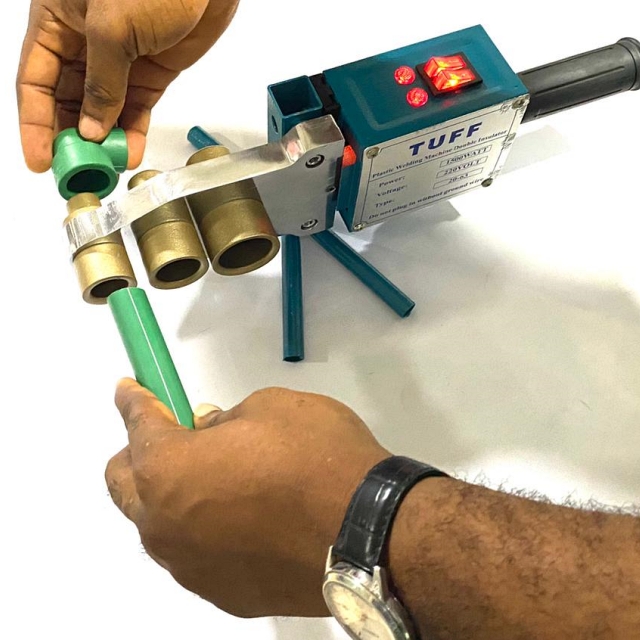
PPR fittings are manufactured from the same polypropylene material as PPR pipes and are designed to be joined using heat fusion welding. During installation, the fitting and the pipe are heated simultaneously with a fusion welding machine before being joined together. As they cool, both components fuse into a single continuous structure, creating a durable, leak-resistant connection when installed according to the manufacturer’s recommendations.
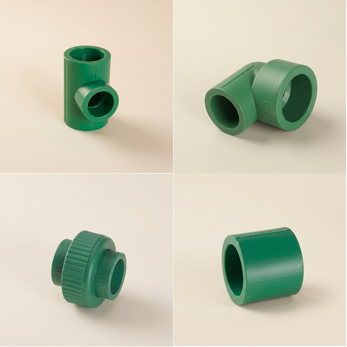
PPR fittings are available in a wide range of designs, each serving a specific purpose within the plumbing system. Common examples include elbows for changing pipe direction, tees for creating branch connections, reducers for connecting different pipe sizes, couplings for joining straight pipe sections, and threaded adapters for connecting PPR systems to taps, valves, or other plumbing fixtures.
Because every fitting performs a unique function, selecting the correct fitting is just as important as choosing the right pipe. A properly designed plumbing system depends on compatible pipes, fittings, valves, and installation techniques working together to deliver safe, efficient, and reliable hot and cold water distribution.
Whether you’re installing plumbing in a residential home, commercial building, hospital, hotel, or industrial facility, understanding the role of PPR fittings is essential to building a system designed for long term performance.

Why Are PPR Fittings Important?
PPR fittings are essential components of every PPR plumbing system because they make it possible to create a complete and functional water distribution network. While pipes provide the pathway for water to flow, fittings connect those pipes, direct water to different locations, control flow, and adapt the system to meet the specific requirements of a building.
Without fittings, a plumbing system would consist of straight lengths of pipe with no ability to change direction, create branch lines, connect fixtures, reduce pipe sizes, or isolate sections of the network for maintenance.
Each PPR fitting is designed to perform a specific function. Elbows change the direction of water flow, tees create branch connections, reducers connect different pipe diameters, couplings join straight pipe sections, and threaded adapters connect PPR pipes to taps, valves, water heaters, and other plumbing fixtures. Together, these components allow installers to design plumbing systems that are efficient, organised, and suited to the layout of the building.
PPR fittings also play a vital role in maintaining the integrity of the plumbing system. When heat fused correctly with compatible PPR pipes, they form durable, leak resistant joints that help minimise the risk of water leakage and support reliable system performance.
In addition to improving functionality, the correct selection of fittings contributes to efficient water flow, proper pressure distribution, and simplified maintenance. Choosing the wrong fitting, using incompatible components, or installing fittings incorrectly can affect the performance of the entire plumbing system, regardless of the quality of the pipes.
For professional plumbers, engineers, architects, and contractors, selecting the appropriate PPR fittings is an important part of designing plumbing systems that are built for long term reliability. Every fitting, regardless of its size, contributes to the safety, efficiency, and overall performance of the completed installation.
A well-designed plumbing system is not defined by the quality of its pipes alone. It depends on every connection working together as a complete, compatible system.

How Do PPR Fittings Work?
PPR fittings work by connecting individual sections of PPR pipe to create a complete plumbing system. Each fitting is designed to perform a specific function, such as changing the direction of water flow, creating branch connections, joining straight pipe sections, reducing pipe sizes, or connecting plumbing fixtures and accessories.
Unlike some piping systems that rely on adhesives or threaded joints for every connection, most PPR fittings are joined to PPR pipes through a process known as heat fusion welding. During installation, the outside of the pipe and the inside of the fitting are heated simultaneously using a PPR fusion welding machine. Once they reach the correct temperature, the pipe is inserted into the fitting and allowed to cool naturally.
As the heated polypropylene cools, the pipe and fitting fuse together at the molecular level, forming a single continuous structure. This permanent bond helps create durable, leak resistant connections that are designed to withstand the demands of modern hot and cold water plumbing systems when installed correctly.
Each type of PPR fitting performs a different role within the plumbing network. For example, elbows redirect water around corners, tees create branch lines, reducers connect different pipe diameters, couplings extend straight pipe runs, and threaded adapters provide secure transitions between PPR pipes and metal plumbing fixtures.
The effectiveness of a PPR fitting depends not only on its design but also on proper installation. Correct heating temperature, heating time, insertion depth, alignment, and cooling time all contribute to the quality of the fusion joint. Using compatible pipes, fittings, and fusion welding equipment from a complete plumbing system also helps ensure consistent installation results.
When every fitting is selected correctly and installed according to the manufacturer’s recommendations, the result is a plumbing network that provides efficient water distribution, dependable performance, and long-term reliability for residential, commercial, institutional, and industrial applications.
Categories of PPR Fittings
PPR fittings are available in many shapes and designs, with each fitting engineered to perform a specific function within a plumbing system. To make selection easier, these fittings can be grouped into categories based on the role they perform during installation.
Understanding these categories helps Plumbers, Engineers, Contractors, and homeowners choose the right fitting for each application while designing efficient and reliable plumbing systems.
1. Straight Fittings
Straight fittings are used to join two sections of PPR pipe along the same direction without changing the flow path.
Common examples include:
- Couplings
- Sockets
- Unions
These fittings are commonly used to extend pipe runs or connect sections of pipe during installation and maintenance.
2. Directional Fittings
Directional fittings change the direction of water flow within the plumbing system.
The most common examples are:
- 45° Elbows
- 90° Elbows
These fittings allow installers to navigate corners, walls, ceilings, and structural obstacles while maintaining efficient water distribution.
3. Branch Fittings
Branch fittings divide water flow into two or more directions.
Examples include:
- Equal Tee
- Reducing Tee
- Cross Tee
These fittings are used when supplying water to multiple fixtures, appliances, or sections of a building from a single pipeline.
4. Transition Fittings
Transition fittings connect pipes of different sizes or different material types.
Examples include:
- Reducers
- Reducing Sockets
- Male Adapters
- Female Adapters
These fittings help integrate PPR systems with threaded plumbing fixtures, valves, pumps, and other equipment.
5. Threaded Fittings
Threaded fittings combine heat fusion connections on one side with threaded metal inserts on the other.
Common examples include:
- Male Elbow
- Female Elbow
- Male Tee
- Female Tee
- Male Adapter
- Female Adapter
These fittings provide secure connections between PPR pipes and plumbing fixtures such as taps, mixers, water heaters, and valves.
6. Valve Fittings
Valve fittings regulate, isolate, or stop water flow within the plumbing system.
Examples include:
- Ball Valve
- Stop Valve
These fittings simplify maintenance by allowing specific sections of the plumbing system to be isolated without shutting off the entire water supply.
7. End Connections
End connection fittings are used to close or terminate sections of pipe.
Common examples include:
- End Cap
- Plug
They are often used during pressure testing, future expansion planning, or temporary system isolation.
8. Specialised Fittings
Some plumbing projects require fittings designed for specific installation requirements.
Examples include:
- Flanges
- Wall Plate Elbows
- Pipe Clips
- Special Connection Accessories
These fittings improve installation flexibility and allow PPR plumbing systems to adapt to a wide range of residential, commercial, and industrial applications.

Why Understanding Fitting Categories Matters
Grouping PPR fittings by function makes it easier to select the correct component during system design and installation. Rather than choosing fittings based solely on appearance, professional installers select each fitting according to its specific purpose within the plumbing network.
Understanding these categories also provides a solid foundation for the next section, where we’ll examine each type of PPR fitting individually, explaining its purpose, applications, and role in creating reliable plumbing systems.
Types of PPR Fittings
PPR fittings are available in a wide variety of shapes and configurations, each designed to perform a specific function within a plumbing system. While PPR pipes transport water throughout a building, fittings make it possible to connect pipes, change direction, create branch lines, regulate water flow, connect plumbing fixtures, and adapt the system to different installation requirements.
Every fitting plays an important role in the overall performance of the plumbing network. Choosing the correct fitting helps maintain efficient water flow, supports proper pressure distribution, simplifies maintenance, and contributes to the long-term reliability of the installation.
Modern PPR plumbing systems include fittings for straight connections, directional changes, pipe size reductions, threaded transitions, flow control, and specialised applications. When these fittings are heat fused with compatible PPR pipes using the correct installation procedures, they become part of a durable, leak-resistant plumbing system designed for reliable hot and cold water distribution.
The following sections explain the most commonly used PPR fittings, their functions, typical applications, and why each one is important in modern plumbing installations.
5.1 PPR Coupling
What Is a PPR Coupling?
A PPR coupling is a straight fitting used to connect two PPR pipes of the same diameter. It is one of the most commonly used fittings in any plumbing installation and is essential for extending pipe runs or joining separate sections of pipe.
PPR couplings are installed using heat fusion welding, creating a permanent molecular bond between the pipe and the fitting. Once cooled, the connection becomes a continuous part of the plumbing system, helping to provide durable and leak-resistant performance.
Couplings are widely used in residential homes, commercial buildings, hotels, hospitals, and industrial facilities where long, uninterrupted pipe runs are required.
Common Applications
- Extending straight pipe runs
- Replacing damaged pipe sections
- Joining two pipes of equal diameter
- Residential and commercial plumbing systems
5.2 PPR Elbow (45° and 90°)
What Is a PPR Elbow?
A PPR elbow is used to change the direction of a plumbing pipeline while maintaining a continuous flow of water. Depending on the installation layout, elbows are available in 45-degree and 90-degree configurations.
A 45° elbow provides a gradual change in direction, while a 90° elbow creates a right-angle turn. These fittings help installers route pipes around corners, walls, ceilings, beams, and other structural obstacles without compromising the integrity of the plumbing system.
Like all PPR fittings, elbows are joined using heat fusion welding to create strong, durable, and leak-resistant connections.
Common Applications
- Bathroom plumbing
- Kitchen water supply
- Water heater installations
- Commercial plumbing layouts
- High-rise buildings
5.3 PPR Tee
What Is a PPR Tee?
A PPR tee is a branch fitting designed to divide water flow from one main pipeline into two separate directions. It features three openings of equal diameter, making it ideal for distributing water to multiple fixtures or different sections of a building.
PPR tees are among the most frequently used fittings in plumbing systems because they allow efficient branching without disrupting the overall water distribution network.
When properly heat fused, they provide strong and reliable connections that support long-term plumbing performance.
Common Applications
- Supplying multiple bathrooms
- Kitchen branch connections
- Residential water distribution
- Commercial plumbing systems
5.4 PPR Cross Tee
What Is a PPR Cross Tee?
A PPR cross tee is a four-way fitting that allows water to be distributed from one central point into multiple directions. Although used less frequently than standard tees, it is particularly useful in plumbing layouts where several branch connections are required within a compact space.
Cross tees can simplify pipe routing, reduce the number of additional fittings needed, and improve installation efficiency in specific applications.

Common Applications
- Commercial plumbing systems
- Industrial water distribution
- Multi-branch installations
- Utility rooms
5.5 PPR Reducer
What Is a PPR Reducer?
A PPR reducer is used to connect two PPR pipes of different diameters, allowing the plumbing system to transition smoothly between larger and smaller pipe sizes.
Reducers are commonly installed where changes in water demand or system design require different pipe diameters. Selecting the correct reducer helps maintain efficient water flow and supports proper pressure distribution throughout the plumbing network.
Like other PPR fittings, reducers are installed using heat fusion welding to create a durable and permanent connection.
Common Applications
- Pipe size transitions
- Residential plumbing
- Commercial water supply
- Industrial installations
How to Choose the Right PPR Fitting
Selecting the right PPR fitting is just as important as choosing the right PPR pipe. Every fitting performs a specific function within a plumbing system, and using the correct fitting helps ensure efficient water flow, reliable performance, and long-term durability.
Whether you’re working on a residential home, commercial building, hotel, hospital, or industrial facility, understanding the key factors involved in fitting selection will help you build a plumbing system that meets the project’s performance requirements.
1. Identify the Purpose of the Fitting
The first step is to determine the function the fitting will perform within the plumbing system.
For example:
- Use couplings to join straight pipe sections.
- Use elbows to change the direction of water flow.
- Use tees to create branch connections.
- Use reducers when connecting pipes of different diameters.
- Use threaded adapters to connect PPR pipes to taps, valves, pumps, or other plumbing fixtures.
Selecting the correct fitting for each application helps simplify installation and improves the efficiency of the overall plumbing system.
2. Match the Pipe Size
PPR fittings must match the diameter of the pipes they connect. Using incorrectly sized fittings can result in poor alignment, installation difficulties, and reduced system performance.
Always verify the pipe size before selecting a fitting and use reducers only where a change in pipe diameter is required.
3. Choose Compatible Compo ents
For the best installation results, use compatible PPR pipes, fittings, valves, and fusion welding equipment that are designed to work together as part of the same plumbing system.
Compatible components help ensure accurate fitment, consistent heat fusion, and reliable long-term performance.
4. Consider the Operating Conditions
The plumbing system should be designed according to its intended application.
Factors to consider include:
- Hot or cold water supply.
- Operating pressure.
- Water demand.
- Building type.
- Installation environment.
Selecting fittings suitable for the project’s operating conditions helps improve system reliability and longevity.
5. Choose High-Quality Materials
The quality of the fitting has a direct impact on the performance of the plumbing system. Precision manufactured fittings made from high quality polypropylene help ensure accurate dimensions, reliable heat fusion, and consistent performance.
Investing in quality fittings can also reduce future maintenance requirements and contribute to the long-term reliability of the installation.
6. Follow Manufacturer Recommendations
Always install PPR fittings according to the manufacturer’s instructions. Correct heating temperature, heating time, insertion depth, alignment, and cooling time are all essential for producing durable fusion joints.
Professional installation is just as important as selecting the right fitting.
Make Every Connection Count
Every fitting in a plumbing system has a specific purpose. Taking the time to choose the correct fitting, verify compatibility, and follow proper installation practices helps create a plumbing system designed for efficient water distribution and dependable long-term performance.
Whether the project is a single family home or a large commercial development, informed fitting selection is one of the foundations of a successful plumbing installation.
| Before Choosing a PPR Fitting, Ask Yourself | ✓ |
|---|---|
| Is this the correct fitting for the application? | ✔ |
| Does it match the pipe diameter? | ✔ |
| Is it compatible with the rest of the plumbing system? | ✔ |
| Is it suitable for the operating pressure and temperature? | ✔ |
| Is it manufactured to a high standard? | ✔ |
| Will it be installed using the correct heat fusion procedure? | ✔ |
Common Sizes of PPR Fittings
PPR fittings are manufactured in a wide range of sizes to match the various pipe diameters used in modern plumbing systems. Selecting the correct fitting size is essential for maintaining efficient water flow, ensuring proper heat fusion, and achieving a reliable plumbing installation.
Each fitting is designed to match the outside diameter of the corresponding PPR pipe. Using the correct size helps ensure accurate alignment during fusion welding and contributes to the long term performance of the plumbing system.
The size required for a project depends on several factors, including water demand, building type, plumbing layout, and the engineering design of the water distribution system.
Standard PPR Fitting Sizes
Although available sizes may vary by manufacturer, the following are the most commonly used PPR fitting sizes in residential, commercial, and industrial plumbing applications.
| Nominal Size | Common Applications |
| 20mm | Wash basins, kitchen sinks, toilets, and residential water outlets |
| 25mm | Bathrooms, showers, water heaters, and branch supply lines |
| 32mm | Main distribution lines in homes and small commercial buildings |
| 40mm | Apartment buildings, hotels, and medium-sized commercial projects |
| 50mm | Large residential developments, commercial buildings, and industrial installations |
| 63mm | High-capacity water distribution systems and institutional projects |
| 75mm – 110mm | Industrial facilities, municipal water systems, and large infrastructure projects |
How to Choose the Correct Fitting Size
Selecting the correct fitting size involves more than matching the pipe diameter. Professional plumbers and engineers also consider:
- The required water flow rate.
- Operating pressure.
- Number of connected fixtures.
- Building occupancy.
- Future expansion requirements.
- The overall plumbing system design.
Using an undersized fitting may restrict water flow, while an oversized fitting can complicate installation and increase material costs. Following the plumbing design and manufacturer’s recommendations helps ensure the correct size is selected for every connection.
Consistency Is Important
All fittings within a plumbing system should be compatible with the corresponding pipe sizes. Where different pipe diameters need to be connected, reducers or reducing fittings should be used rather than forcing incompatible components together.
Maintaining size consistency throughout the system supports efficient water distribution, reliable fusion welding, and easier future maintenance.
Choosing the Right Size for Long-Term Performance
Every plumbing project has unique requirements, but one principle remains the same: using correctly sized PPR fittings contributes to a safer, more efficient, and more reliable plumbing system.
Whether you’re installing plumbing in a residential home or designing a large commercial water distribution network, selecting the right fitting size is an important step toward achieving long-term system performance.
| Pipe Size | Typical Use |
| 20mm | Individual plumbing fixtures |
| 25mm | Branch supply lines |
| 32mm | Main residential distribution |
| 40mm | Small commercial buildings |
| 50mm | Large buildings |
| 63mm+ | Industries |
Applications of PPR Fittings
PPR fittings are used wherever reliable hot and cold water distribution is required. By connecting, directing, branching, reducing, and controlling the flow of water, they enable PPR piping systems to function efficiently across a wide range of residential, commercial, institutional, and industrial applications.
When properly selected and installed using compatible PPR pipes and heat fusion techniques, PPR fittings help create durable, leak-resistant plumbing systems designed for long-term performance.
1. Residential Buildings
PPR fittings are widely used in houses, apartments, duplexes, and residential estates to distribute hot and cold water throughout the property.
Common residential applications include:
- Bathroom plumbing
- Kitchen water supply
- Wash basin connections
- Water heater installations
- Laundry areas
- Outdoor water outlets
Their corrosion resistance and durable heat fused connections make them well suited for modern residential plumbing systems.
2. Commercial Buildings
Office complexes, shopping malls, restaurants, supermarkets, and business centres depend on PPR fittings to support complex water distribution networks.
The wide variety of fitting types allows installers to create efficient plumbing layouts while maintaining reliable system performance.
3. Hotels and Hospitality Facilities
Hotels require continuous water supply to guest rooms, kitchens, laundries, swimming pools, spas, and other service areas.
PPR fittings help connect these multiple water supply lines while supporting dependable operation and simplified maintenance.
4. Hospitals and Healthcare Facilities
Hospitals, clinics, and healthcare centres require hygienic and reliable plumbing systems.
PPR fittings are commonly specified for potable water systems because, when used with certified PPR pipes and installed correctly, they provide corrosion resistant and durable connections suitable for demanding healthcare environments.
5. Educational Institutions
Schools, universities, colleges, and training centres use PPR fittings to distribute water to classrooms, laboratories, cafeterias, hostels, and sanitary facilities.
Their long service life and low maintenance requirements make them suitable for buildings with high daily water usage.
6. Industrial Facilities
Factories and manufacturing plants use PPR fittings in process water distribution, cooling systems, and other industrial plumbing applications where corrosion resistance and dependable performance are important.
The suitability of PPR systems for industrial applications depends on the operating conditions and compatibility with the intended use.
7. High-Rise Developments
High rise residential and commercial buildings require plumbing systems capable of supplying water efficiently across multiple floors.
PPR fittings enable installers to create complex distribution networks using tees, elbows, reducers, valves, and other specialised fittings while maintaining reliable system performance.
8. Water Treatment and Infrastructure Projects
PPR fittings are also used in selected water treatment and utility projects where durable, corrosion-resistant piping systems are required.
Combined with quality PPR pipes, they contribute to efficient water distribution in appropriately designed infrastructure applications.
One Fitting, Many Applications
Although each PPR fitting performs a specific function, together they create complete plumbing systems capable of serving buildings of every size and purpose.
From a simple residential bathroom to a large commercial complex or industrial facility, the correct combination of pipes and fittings is essential for delivering efficient water flow, dependable operation, and long term reliability.
| Application | Typical Use | Common PPR Fittings |
| Residential Homes | Bathrooms, kitchens, water heaters | Elbows, tees, couplings, reducers |
| Commercial Buildings | Office and retail water supply | Tees, valves, adapters, unions |
| Hotels | Guest rooms and service areas | Elbows, ball valves, reducers |
| Hospitals | Potable water distribution | Threaded fittings, valves, tees |
| Educational Institutions | Classrooms and hostels | Couplings, elbows, tees |
| Industrial Facilities | Process and cooling water | Flanges, reducers, valves |
| High-Rise Buildings | Multi-floor water supply | Tees, reducers, unions, valves |
| Infrastructure Projects | Water distribution systems | Large-diameter fittings and flanges |
Common Mistakes When Selecting PPR Fittings
Selecting the correct PPR fitting is essential for building a reliable plumbing system. While high quality pipes and fittings are designed for long term performance, choosing the wrong fitting or using it incorrectly can affect water flow, complicate installation, and increase maintenance requirements.
Many plumbing problems can be avoided by understanding the most common fitting selection mistakes before installation begins.
1. Choosing the Wrong Type of Fitting
Every PPR fitting is designed for a specific purpose. Using an elbow where a tee is required, or selecting a coupling instead of a reducer, can affect the efficiency and functionality of the plumbing system.
Before selecting a fitting, always identify the specific connection or function required within the pipe network.
2. Using the Wrong Fitting Size
One of the most common installation mistakes is selecting a fitting that does not match the pipe diameter.
Incorrect sizing can lead to poor alignment, difficult installation, reduced water flow, and unreliable fusion joints. Always verify the pipe size before selecting the corresponding fitting.
3. Mixing Incompatible Components
Not all plumbing components are designed to work together. Mixing incompatible pipes, fittings, or welding equipment may affect fitment and fusion quality.
For the best results, use compatible PPR system components that are designed to work together and follow the manufacturer’s recommendations.
4. Ignoring the Application
Different plumbing systems have different requirements. A fitting suitable for a residential bathroom may not be the best choice for a high-demand commercial or industrial installation.
Always consider the building type, water demand, operating pressure, and intended application when selecting PPR fittings.
5. Prioritising Price Over Quality
Choosing fittings based solely on cost can result in lower quality components that may not provide the same level of precision, durability, or long term reliability.
Investing in quality PPR fittings helps improve installation accuracy and contributes to the overall performance of the plumbing system.
6. Overlooking Installation Requirements
Even the correct fitting can underperform if it is not installed properly.
Incorrect heating time, poor alignment, insufficient insertion depth, or moving the joint before it has cooled can compromise the integrity of the fusion weld.
Following the recommended installation procedures is essential for achieving durable and leak-resistant connections.
7. Failing to Plan for Future Maintenance
A well designed plumbing system should also consider future maintenance and accessibility.
Using unions, valves, and appropriate transition fittings in strategic locations can simplify servicing and reduce disruption if repairs or modifications are required later.
Plan Before You Install
Selecting the right PPR fitting is about more than making a connection it is about building a plumbing system that performs reliably throughout its service life.
By choosing the correct fitting type, matching the proper size, using compatible components, and following professional installation practices, plumbers and contractors can reduce installation errors and improve the long-term performance of every project.
Best Practices for Installing PPR Fittings
Selecting the right PPR fitting is only one part of building a reliable plumbing system. Proper installation is equally important. Even the highest quality pipes and fittings may not perform as intended if they are installed incorrectly.
Professional Plumbers understand that successful installations depend on careful planning, the correct tools, compatible system components, and adherence to the manufacturer’s installation guidelines. Following recognised best practices helps improve fusion quality, reduce installation errors, and support the long term performance of the plumbing system.
1. Use Compatible PPR System Components
For consistent installation results, always use compatible PPR pipes, fittings, valves, and fusion welding equipment. Components designed to work together help ensure proper fitment and reliable heat fusion.
Using compatible products also reduces the risk of dimensional differences that may affect joint quality.
2. Inspect Pipes and Fittings Before Installation
Before beginning installation, examine all pipes and fittings for visible damage, contamination, or manufacturing defects.
Ensure the components are clean, dry, and free from dust, grease, or debris that could interfere with the heat fusion process.
3. Use the Correct Fusion Welding Equipment
Install PPR fittings using a suitable fusion welding machine with the correct heating dies for the pipe diameter being used.
The welding machine should be clean, properly maintained, and operated according to the manufacturer’s recommended temperature settings.
4. Follow the Recommended Fusion Procedure
Heat the pipe and fitting for the specified time, insert the pipe straight into the fitting without twisting, and allow the joint to cool naturally before applying any load or pressure.
Following the recommended installation procedure helps produce strong, consistent fusion joints.
5. Maintain Proper Pipe Alignment
During installation, ensure pipes and fittings remain properly aligned before and during fusion.
Misaligned joints can introduce unnecessary stress into the plumbing system and may affect long term performance.
6. Allow Adequate Cooling Time
After each fusion joint is completed, allow the connection to cool naturally for the recommended period before handling or pressure testing the system.
Artificial cooling methods should be avoided unless specifically recommended by the manufacturer.
7. Pressure Test the Completed System
Once installation has been completed, perform a pressure test in accordance with the project specifications and applicable plumbing standards.
Pressure testing verifies the integrity of the completed plumbing system before it is commissioned or concealed within the building.
Why Professional Installation Matters
The long-term reliability of a PPR plumbing system depends on more than quality materials alone. Proper installation techniques help ensure that every fitting performs its intended function while supporting efficient water distribution and reducing the likelihood of future maintenance issues.
By combining quality PPR pipes, precision-engineered fittings, professional fusion welding equipment, and correct installation practices, installers can build plumbing systems designed to deliver dependable performance for many years.

Why Quality PPR Fittings Matter
The performance of a plumbing system depends on every component working together reliably. While proper installation is essential, the quality of the PPR fittings used throughout the system plays an equally important role in determining its long-term performance.
Each fitting serves as a connection point within the plumbing network. If a fitting is poorly manufactured, incorrectly dimensioned, or made from substandard materials, it can affect installation quality, compromise fusion joints, and reduce the overall reliability of the system.
Choosing high-quality PPR fittings helps ensure that every connection contributes to a plumbing system designed for durability, efficiency, and dependable operation.
1. Precision Manufacturing Improves Fitment
Well manufactured PPR fittings are produced to precise dimensional tolerances, allowing them to fit accurately with compatible PPR pipes during heat fusion.
Accurate fitment helps installers achieve proper insertion depth, consistent alignment, and reliable fusion joints, reducing the likelihood of installation errors.
2. Reliable Fusion Performance
Quality fittings are designed to perform consistently during the heat fusion process. When used with compatible pipes and installed according to the manufacturer’s recommendations, they help create strong molecular bonds that support long term plumbing performance.
Consistent fusion quality is particularly important in concealed plumbing systems where future access for repairs may be limited.
3. Supports Efficient Water Flow
Precision engineered fittings help maintain smooth internal water passages, reducing unnecessary flow restrictions and supporting efficient water distribution throughout the plumbing network.
This contributes to improved system performance in both residential and commercial applications.
4. Corrosion Resistance
PPR fittings are manufactured from polypropylene, a material known for its resistance to corrosion. Unlike traditional metal fittings that may be affected by rust over time, quality PPR fittings help maintain the integrity of modern hot and cold water plumbing systems.
This makes them suitable for a wide range of potable water applications when installed according to relevant standards.
5. Long-Term Durability
Quality PPR fittings are designed to withstand the normal operating pressures and temperatures specified by the manufacturer. Combined with professional installation, they contribute to plumbing systems that are built for dependable long-term service.
Investing in quality components today can help reduce maintenance requirements and minimise the risk of costly repairs in the future.
6. Confidence for Every Project
Whether you’re installing plumbing in a residential home, hotel, hospital, office complex, or industrial facility, using quality PPR fittings provides greater confidence that every connection has been designed for reliable performance.
For Professional Plumbers, Engineers, Contractors, and Developers, component quality is an important part of delivering projects that meet high standards of workmanship and reliability.
Quality Is an Investment in Performance
Every fitting may seem like a small part of the plumbing system, but together they determine how efficiently water is distributed throughout the building.
Choosing quality PPR fittings, using compatible system components, and following professional installation practices helps create plumbing systems that are designed to perform reliably for years to come.
| Feature | Benefit |
| Precision dimensions | Accurate fit during installation |
| Smooth internal surface | Supports efficient water flow |
| High-quality polypropylene | Corrosion resistance and durability |
| Consistent manufacturing | Reliable heat fusion performance |
| Compatible system design | Improved long-term reliability |
| Professional installation support | Reduced maintenance and dependable operation |
Frequently Asked Questions (FAQs) About PPR Fittings
1. What are PPR fittings?
PPR fittings are plumbing components used to connect, change direction, branch, reduce, terminate, or control the flow of water within a PPR (Polypropylene Random Copolymer) piping system. They are joined to PPR pipes using heat fusion welding to create durable, leak-resistant connections.
2. What are PPR fittings used for?
PPR fittings are used to build complete hot and cold water plumbing systems. They connect pipes, create branch lines, change pipe direction, connect plumbing fixtures, reduce pipe sizes, and regulate water flow in residential, commercial, and industrial buildings.
3. What are the most common types of PPR fittings?
Some of the most commonly used PPR fittings include:
- Couplings
- Elbows (45° and 90°)
- Tees
- Cross Tees
- Reducers
- Reducing Tees
- Male and Female Adapters
- Male and Female Elbows
- Male and Female Tees
- Unions
- Ball Valves
- Stop Valves
- End Caps
- Plugs
- Sockets
- Flanges
- Pipe Clips
- Wall Plate Elbows
Each fitting performs a specific function within the plumbing system.
4. How are PPR fittings connected?
Most PPR fittings are connected using heat fusion welding. During installation, the pipe and fitting are heated simultaneously using a fusion welding machine and then joined together to form a permanent molecular bond.
5. Can PPR fittings be used for hot water systems?
Yes. PPR fittings are commonly used in both hot and cold water plumbing systems when installed with compatible PPR pipes and used within the manufacturer’s recommended operating conditions.
6. Are PPR fittings safe for drinking water?
Many certified PPR fittings are suitable for potable water applications. Always ensure the products comply with the relevant standards and are installed according to the manufacturer’s recommendations.
7. How long do PPR fittings last?
The service life of PPR fittings depends on factors such as operating pressure, water temperature, installation quality, and system design. Quality PPR systems that are properly installed are commonly designed to provide decades of reliable service under appropriate operating conditions.
8. Can different brands of PPR pipes and fittings be mixed?
Although it may be possible in some situations, using compatible pipes, fittings, and fusion welding equipment from the same plumbing system is generally recommended to help ensure proper fitment, consistent heat fusion, and reliable long term performance.
9. What size PPR fitting should I use?
The correct fitting size depends on the diameter of the pipe and the plumbing system design. Common sizes include 20mm, 25mm, 32mm, 40mm, 50mm, and 63mm, with larger sizes available for commercial and industrial applications.
10. Why are quality PPR fittings important?
Quality PPR fittings are manufactured to precise dimensions, helping ensure accurate fitment, reliable heat fusion, efficient water flow, and long term durability. Using high quality fittings contributes to the overall performance and reliability of the plumbing system.
11. What is the difference between a PPR coupling and a union?
A PPR coupling is a permanent fitting used to join two pipes of the same diameter through heat fusion. A PPR union also joins pipes but is designed to be disconnected when maintenance, repair, or future modifications are required without cutting the pipe.
12. Why should I choose a complete PPR plumbing system?
Using compatible PPR pipes, fittings, valves, and fusion welding equipment helps simplify installation and supports consistent performance throughout the plumbing system. A complete system approach contributes to reliable water distribution, easier maintenance, and long-term durability.

Conclusion
Every reliable plumbing system is built from more than just quality pipes. The fittings that connect, direct, reduce, branch, and control water flow are equally important to the system’s long term performance.
Choosing the correct PPR fitting for each application helps improve installation quality, supports efficient water distribution, and reduces the likelihood of future maintenance issues. When compatible pipes, fittings, and professional heat fusion techniques are combined, they create a plumbing system designed for dependable performance for decades.
Whether you’re installing plumbing in a residential home, a commercial development, a healthcare facility, or an industrial project, understanding the role of each PPR fitting allows you to make better decisions from design through installation.
Why Choose TUFF PPR Pipes & Fittings?
A plumbing system is only as reliable as the components used to build it. While quality pipes form the foundation of the system, the fittings that connect, direct, branch, and control water flow are equally important to its long term performance.
For this reason, professional plumbers, engineers, contractors, architects, and developers often prefer complete plumbing systems where the pipes, fittings, valves, and installation equipment are designed to work together.
At TUFF Bathrooms, we provide a complete PN25 PPR Plumbing System developed to meet the demands of modern residential, commercial, institutional, and industrial plumbing projects. Our PPR pipes, fittings, valves, and fusion welding equipment are engineered for compatibility, helping installers achieve consistent, reliable results throughout every stage of installation.
A Complete Plumbing Solution
Rather than sourcing components from different manufacturers, TUFF offers an integrated range of products designed to work together as one system.
Our PPR plumbing range includes:
- PN25 PPR Pipes
- PPR Fittings
- PPR Fusion Welding Machines
- PPR Ball Valves
- PPR Accessories
Using compatible system components helps simplify installation, improve fitment, and support reliable fusion performance.
Designed for Modern Plumbing Projects
TUFF PPR fittings are suitable for a wide range of applications, including:
- Residential homes
- Apartment buildings
- Hotels
- Hospitals
- Commercial developments
- Educational institutions
- Industrial facilities
Combined with professional installation practices, they help create dependable hot and cold water distribution systems designed for long term performance.
Quality You Can Trust
At TUFF Bathrooms, quality extends beyond the products we supply. We are committed to supporting the construction industry with technical knowledge, practical installation guidance, and reliable plumbing solutions that help professionals build with confidence.
Every fitting is designed to work seamlessly with our compatible PPR pipes and fusion welding equipment, creating a complete plumbing system that supports durability, efficiency, and dependable operation.
Whether you’re installing plumbing for a single home or specifying materials for a large commercial development, TUFF provides the products and technical support needed to deliver reliable results.
Build Every Connection with Confidence
Choosing the right PPR fittings is about more than making pipe connections—it’s about building plumbing systems that stand the test of time.
With premium PPR pipes, precision engineered fittings, dependable fusion welding equipment, and expert technical support, TUFF Bathrooms helps professionals deliver plumbing installations with confidence.

Speak with a TUFF Plumbing Expert
Choosing the right PPR pipes and fittings is only one part of building a reliable plumbing system. Every project has unique requirements, from selecting the appropriate pipe sizes and fittings to understanding pressure ratings, plumbing layouts, and installation methods.
Whether you’re working on a residential home, commercial development, hotel, hospital, industrial facility, or infrastructure project, making informed decisions at the planning stage can help improve installation efficiency, reduce costly mistakes, and support long-term system performance.
That’s why TUFF Bathrooms provides more than premium plumbing products we provide technical guidance to help professionals and homeowners make the right choices with confidence.
Our Plumbing Experts Can Help You With:
- Selecting the right PPR pipes and fittings for your project.
- Choosing the correct fitting sizes and configurations.
- Understanding PN pressure ratings and product specifications.
- Recommending suitable fusion welding equipment.
- Providing technical guidance for residential, commercial, and industrial plumbing installations.
- Helping you identify the right products for hot and cold water systems.
- Connecting you with an authorised TUFF distributor near you.
Whether you’re a homeowner planning a renovation, a plumber managing an installation, an engineer designing a water distribution system, or a developer overseeing a large construction project, our team is ready to support you.
Why Speak with TUFF?
At TUFF Bathrooms, we believe that every successful plumbing project starts with the right advice. Our goal is to help you specify compatible products, avoid common installation challenges, and build plumbing systems designed for dependable long-term performance.
By combining premium products with practical technical support, we help professionals deliver projects with greater confidence and efficiency.
Let’s Build Your Next Project Together
If you need help selecting the right PPR plumbing solution, our team is ready to assist.
Whether you’re looking for product recommendations, technical information, or guidance on your next project, we’re here to help.
Contact TUFF Bathrooms today and speak with a Plumbing Expert.
Strong Call to Action
Build Every Connection with Confidence
Every pipe connection contributes to the strength and reliability of the entire plumbing system. Choosing compatible, precision engineered fittings is essential for creating durable, leak resistant hot and cold water installations.
At TUFF Bathrooms, we provide complete PN25 PPR plumbing solutions, including premium PPR pipes, precision engineered fittings, fusion welding equipment, valves, and accessories designed to work together as one integrated system.
Whether you’re a plumber, contractor, engineer, architect, developer, or homeowner, our technical team is ready to help you select the right products for your project.
Explore TUFF’s complete range of PPR plumbing solutions, download our product catalogue, or speak with a TUFF Plumbing Expert today.
Build Smarter. Build Stronger. Build with TUFF.